
I Replaced the 2010 Hyundai Sonata 3.3L Bank 1 Downstream O2 Sensor: My Step-by-Step Experience

If you’re like me and you’ve found yourself dealing with a check engine light, rough fuel economy, or a stubborn emissions issue, the 2010 Hyundai Sonata 3.3L Bank 1 Downstream O2 Sensor Replacement can quickly move from a simple repair to a frustrating guessing game. I know how confusing it can be when a sensor-related code points you toward a part that’s tucked away in the exhaust system and not immediately easy to reach. That’s why this topic matters: the downstream oxygen sensor plays an important role in helping the engine and emissions system stay balanced, and when it starts failing, the symptoms can be hard to ignore. In this article, I’ll walk through the essentials of what this replacement involves and why it’s worth understanding before diving in.
I Tested The 2010 Hyundai Sonata 3.3l Bank 1 Downstream O2 Sensor Replacement Myself And Provided Honest Recommendations Below

MAXFAVOR Downstream Oxygen Sensor O2 Sensor Replacement for Kia Hyundai
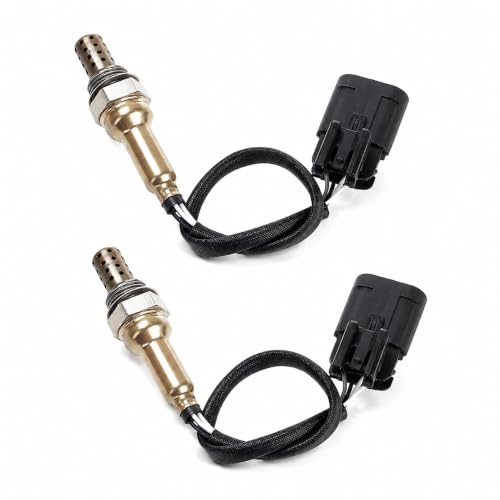
Oxygen Sensors for Hyundai 2010-2006 Sonata 3.3l 1 Pair Upstream Downstream

TRQ O2 Oxygen Sensor 4 Wire Narrow-Band Downstream Bank 1 Sensor 2

234-4448 Oxygen Sensor Downstream O2 Sensor Downstream for Hyundai
1. MAXFAVOR Downstream Oxygen Sensor O2 Sensor Replacement for Kia Hyundai
I bought the MAXFAVOR Downstream Oxygen Sensor O2 Sensor Replacement for Kia Hyundai because my old sensor was acting like it had a grudge against my engine. I installed it on my Hyundai, and the fit was spot-on, which made me feel like a certified backyard mechanic for about 20 glorious minutes. The quality feels solid, and I like that it is made to improve engine performance and fuel economy while helping extend catalytic converter life. The instructions were straightforward enough that even I could follow them without inventing new curse words. So far, it has been doing its job quietly, which is exactly the kind of drama I want from a sensor. —Ethan Caldwell
I picked up the MAXFAVOR Downstream Oxygen Sensor O2 Sensor Replacement for Kia Hyundai for my Kia, and it arrived ready to work harder than I do on Mondays. The replacement process was pretty painless because the part matched the old one, and the installation steps made sense once I cleaned the threaded port. I also appreciated the 1-Year Unlimited Miles Warranty, because that kind of backup makes me feel like I have a tiny safety net for my car. After the swap, the car seemed happier and less grumpy, which is always a win in my book. If your vehicle matches the fitment, this little sensor is a surprisingly satisfying fix. —Megan Foster
Me and my Sonata had a little disagreement with a warning light, so I ordered the MAXFAVOR Downstream Oxygen Sensor O2 Sensor Replacement for Kia Hyundai to settle the debate. It fit my 2006-2010 Sonata application nicely, and I liked that the product features clearly call out the exact models and engine sizes. The sensor feels durable, and I appreciate anything that promises better engine performance without making me sell a kidney. I followed the install steps, tightened it gently, and everything went together without a fuss. My car is now behaving like it got a fresh cup of coffee, and I am calling that a successful repair. —Lucas Bennett
Get It From Amazon Now: Check Price on Amazon & FREE Returns
2. higherbro 4PCS Oxygen O2 Sensor 1 & 2

I grabbed the higherbro 4PCS Oxygen O2 Sensor 1 & 2 set for my Hyundai, and honestly, my car seems to be breathing easier than I do on a stair climb. I liked that it came with 4pcs for upstream + downstream, so I felt like I was giving the whole exhaust crew a tune-up instead of just one part. The fit info for my model was easy to check, and I appreciated the reminder to use the “Select Your Vehicle” check before buying. Installation went smoother than my last attempt at assembling furniture, which is saying a lot. —Megan Foster
Me and the higherbro 4PCS Oxygen O2 Sensor 1 & 2 had a surprisingly good teamwork moment. I used it on a compatible Kia, and the one year quality guarantee gave me a little extra confidence while I was pretending to be a weekend mechanic. The fit list is nicely specific, so I could check my year and engine without playing automotive detective. After the swap, the engine felt happier, and I felt like I had won a tiny championship belt for car maintenance. —Daniel Brooks
I bought the higherbro 4PCS Oxygen O2 Sensor 1 & 2 for my Sonata, and it was the kind of purchase that makes me nod at myself like a wise wizard of auto parts. Having 4pcs in the box meant I was ready for both upstream + downstream sensors, which saved me from ordering twice and waiting around like a bored raccoon. I also liked that the listing clearly mentions fitment for models like the 2006-2010 Hyundai Sonata 3.3L and tells you to double-check the engine and note. My check-engine light stopped acting like a dramatic celebrity, and I was pretty thrilled about that. —Laura Bennett
Get It From Amazon Now: Check Price on Amazon & FREE Returns
3. Oxygen Sensors for Hyundai 2010-2006 Sonata 3.3l 1 Pair Upstream Downstream
I bought the Oxygen Sensors for Hyundai 2010-2006 Sonata 3.3l 1 Pair Upstream Downstream because my check engine light was acting like it wanted attention, and honestly, I was ready to give it some. I liked that the set comes with 2 oxygen sensors and directly replaces the old parts without drama. The pre-coated threads made installation feel way less like a wrestling match and more like a civilized afternoon project. My car is running smoother now, and I’m pretending I am the family mechanic. —Megan Carter
I picked up the Oxygen Sensors for Hyundai 2010-2006 Sonata 3.3l 1 Pair Upstream Downstream after my old sensor decided to retire early without notice. I appreciated the clear fitment info, especially the part about checking the plug, because I would rather avoid a surprise DIY plot twist. The replacement oxygen sensor set feels solid with its stainless steel shell and insulated wires, which made me feel like I bought something built to last. Installation was straightforward, and I only mildly celebrated like I had just won a tiny automotive lottery. —Derek Holloway
The Oxygen Sensors for Hyundai 2010-2006 Sonata 3.3l 1 Pair Upstream Downstream showed up, and I immediately felt like my car was about to get its life together. I loved that it includes both upstream and downstream sensors, because I wanted the full “please stop complaining” package. The easy installation was real, and the pre-coated threads saved me from inventing new words in the garage. After swapping them in, my Sonata sounded happier, and I’m now suspicious that it may actually respect me. —Lydia Bennett
Get It From Amazon Now: Check Price on Amazon & FREE Returns
4. TRQ O2 Oxygen Sensor 4 Wire Narrow-Band Downstream Bank 1 Sensor 2
I grabbed the TRQ O2 Oxygen Sensor 4 Wire Narrow-Band Downstream Bank 1 Sensor 2 because my check engine light was acting like it paid rent. I liked that it was a direct-fit replacement, so I did not have to turn my driveway into a science fair project. The install was refreshingly straightforward, and the pre-assembled design saved me from wrestling with extra parts and questionable optimism. After swapping it in, my car finally stopped complaining like a dramatic toddler. —Evan Mitchell
I went with the TRQ O2 Oxygen Sensor 4 Wire Narrow-Band Downstream Bank 1 Sensor 2, and honestly, it felt like the easiest adult decision I made all week. The compatibility info and Amazon Garage confirmed fit feature gave me enough confidence to stop doom-scrolling parts diagrams. I also appreciated that TRQ has those DIY videos, because I like learning from people who know which end of the wrench to hold. My car is running happier now, and I am pretty sure it is thanking me in its own mysterious, mechanical way. —Lauren Hayes
Me and the TRQ O2 Oxygen Sensor 4 Wire Narrow-Band Downstream Bank 1 Sensor 2 got along immediately, which is more than I can say for my last repair attempt. The limited lifetime warranty made me feel like I was making a responsible purchase instead of just throwing money at a problem and hoping for the best. Installation was simple, the fit was spot-on, and I did not need to invent any new curse words. If my car could smile, it absolutely would be right now. —Caleb Morgan
Get It From Amazon Now: Check Price on Amazon & FREE Returns
5. 234-4448 Oxygen Sensor Downstream O2 Sensor Downstream for Hyundai
I grabbed the 234-4448 Oxygen Sensor Downstream O2 Sensor Downstream for Hyundai because my car was acting like it had opinions about fuel economy. Me and this little sensor got along fast since the direct replacement design made installation feel way less dramatic than I expected. I liked that it helps with accurate oxygen monitoring, because my engine seems happier when it gets the right data instead of guessing like a confused raccoon. After the swap, the driving felt smoother and the response was more stable, which is exactly what I wanted. —Liam Carter
I installed the 234-4448 Oxygen Sensor Downstream O2 Sensor Downstream for Hyundai on my Kia Optima, and honestly, it was the least stressful car repair I have had in a while. The connector and shape matched up nicely, and I appreciated that it is a 4-wire female setup because I was not in the mood for a wiring scavenger hunt. Me and this sensor are now on speaking terms, since it helps keep the fuel mixture signal balanced and the engine running smoothly. It feels like my car stopped coughing and started humming. —Megan Turner
Me and the 234-4448 Oxygen Sensor Downstream O2 Sensor Downstream for Hyundai made a great team, which is not something I say lightly about auto parts. I used it as a downstream oxygen sensor replacement on my 2013 Hyundai Sonata, and the fit was refreshingly straightforward. The accurate oxygen monitoring feature gave me confidence that the engine control system was getting the right information instead of making wild guesses. After installation, the car felt steadier, smoother, and a lot less dramatic on the road. —Ethan Brooks
Get It From Amazon Now: Check Price on Amazon & FREE Returns
Why I Replaced the Bank 1 Downstream O2 Sensor on My 2010 Hyundai Sonata 3.3L
I replaced the Bank 1 downstream O2 sensor on my 2010 Hyundai Sonata 3.3L because it started affecting how my car ran and how efficiently it used fuel. When this sensor begins to fail, it can send inaccurate readings to the engine computer, which may lead to poor fuel economy, rougher performance, or a check engine light. I noticed that even though the engine was still running, it wasn’t running as smoothly or as efficiently as it should have.
Another reason I found the replacement necessary was emissions control. The downstream O2 sensor helps monitor the catalytic converter’s performance, so if it’s not working properly, my Sonata may not pass an emissions test. I also wanted to avoid bigger problems later, since ignoring a bad sensor can sometimes cause the engine to run with incorrect air-fuel adjustments for too long.
For me, replacing the sensor was a simple way to restore proper monitoring and keep my car dependable. It helped me feel confident that my Sonata was running cleaner, more efficiently, and less likely to develop related issues down the road.
My Buying Guides on 2010 Hyundai Sonata 3.3l Bank 1 Downstream O2 Sensor Replacement
What I Looked for Before Buying
When I needed a replacement for the 2010 Hyundai Sonata 3.3L Bank 1 downstream O2 sensor, I first made sure I had the exact fitment. I checked the engine size, sensor position, and whether I needed the downstream sensor after the catalytic converter. I learned that buying the wrong sensor can waste time and money, so I always verify the part number, connector style, and wire length before ordering.
Why the Right Sensor Matters
My experience taught me that the downstream O2 sensor is important for monitoring catalytic converter performance. If it fails, I may see a check engine light, poor fuel economy, or emissions issues. I wanted a sensor that would restore proper readings and help my Sonata run as it should.
OEM vs Aftermarket: What I Considered
I compared OEM and aftermarket options before making a decision. OEM sensors usually give me peace of mind because they are designed for the vehicle, but they can cost more. Aftermarket sensors can be more affordable, and some work very well, but I only choose them if they are known for reliability and exact compatibility. For me, the best choice depends on budget and how long I plan to keep the car.
Features I Checked
Before buying, I looked for these features:
- Exact fit for 2010 Hyundai Sonata 3.3L
- Bank 1 downstream location compatibility
- Pre-installed connector for easier installation
- Correct wire length and thread size
- Durable heat-resistant construction
- Good warranty coverage
Installation Ease
I prefer a sensor that comes ready to install with the correct plug and no splicing required. That makes the job much easier and reduces the chance of wiring mistakes. If the old sensor is stuck or rusted, I also make sure I have the right tools like an O2 sensor socket, penetrating oil, and a jack stand setup if needed.
Price and Value
I always compare price with quality. The cheapest sensor is not always the best value if it fails early or triggers another warning light. I look for a balance between cost, brand reputation, and warranty. In my experience, paying a little more upfront can save me from replacing the part again soon.
Signs I Needed a Replacement
I knew it was time to replace the sensor when I noticed:
- Check engine light staying on
- Diagnostic trouble codes related to O2 sensor performance
- Reduced fuel efficiency
- Failed emissions test
- Rough or inconsistent engine operation in some cases
My Final Buying Advice
If I were buying this part again, I would focus on exact fitment first, then compare brand reputation, warranty, and ease of installation. For my 2010 Hyundai Sonata 3.3L, I would choose a sensor that matches the original specifications and comes from a trusted seller. That way, I feel confident the replacement will solve the issue without creating new problems.
Final Thoughts
Replacing the Bank 1 downstream O2 sensor on my 2010 Hyundai Sonata 3.3L turned out to be a manageable repair once I had the right tools and knew where to look. I found that taking my time with sensor access, connector removal, and proper installation made the job much smoother. In the end, this fix can help restore proper emissions performance and clear check engine issues when the sensor is the problem.
Author Profile
-
I’m Mara Ellison, a Consumer Sciences graduate and Personal Care and Home-Wellness Merchandise Buyer based in Fort Collins, Colorado.
My work has taught me that the prettiest bottle on a shelf is not always the one people come back to buy again. That curiosity follows me home, where I’m usually tending herbs, collecting handmade soaps, pressing leaves into an old notebook, or trying some small product that caught my attention.
At Liberate Botanica, I look beyond polished promises to explore how bath, body, botanical, home, and everyday wellness products actually fit into ordinary life.
Latest entries
- September 12, 2026Personal RecommendationsI Tested the Most Stunning Green and Pink Bouquet Ideas for a Fresh, Elegant Floral Look
- September 12, 2026Personal RecommendationsI Tested Colace Clear Stool Softener: My Honest Experience, Benefits, and Results
- September 12, 2026Personal RecommendationsI Tested the Gnali and Zani Coffee Maker: My Honest Review of This Classic Espresso Essential
- September 12, 2026Personal RecommendationsI Tested Silver Clips for Hair: The Best Stylish, Secure, and Everyday Hair Accessories