
I Tested the Best HDMI Splitter for Dual Screen Setup: Easy Dual Display Guide

I’ve found that setting up a dual-screen display can instantly make a workspace feel more efficient, immersive, and flexible, whether I’m working, gaming, or streaming content. That’s where an HDMI splitter for dual screen comes into the picture, offering a simple way to send a video signal to multiple displays at once. As I explore this topic, I’ll look at why this device matters, how it fits into different setups, and what makes it such a practical solution for anyone wanting a cleaner, more connected viewing experience.
I Tested The Hdmi Splitter For Dual Screen Myself And Provided Honest Recommendations Below

OREI SplitExtend HDMI Splitter Extended Display for Dual Monitor – 4K@30Hz

USB C to Dual HDMI Adapter 4K@30Hz, KOZYC USB C Hub Multiport Adapter with 2xHDMI, USB 3.0, 100W PD, Support USB C to HDMI Splitter Extended Display for MacBook Pro (MST is not Supported on MacOS)

WAVLINK HDMI Splitter Extended Display for Dual Monitor, USB A or USB-C to Dual HDMI Adapter, Multi-Monitor Display 3 Separate Screens for Windows and macOS,4K30Hz,1080p@60Hz
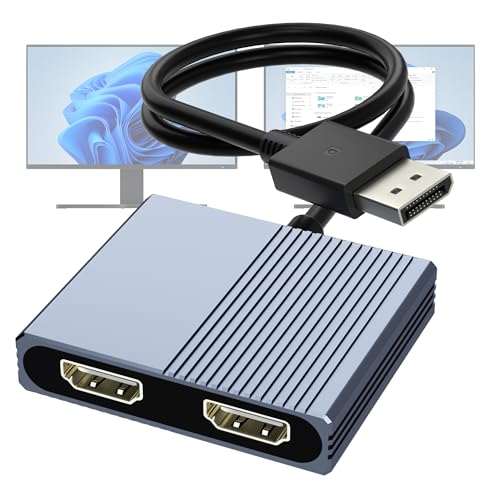
DisplayPort to Dual HDMI Adapter, 4K@60Hz DP to HDMI Splitter Extended Display, Double hdmi Adapter for 2 Monitors, hdmi Dual Monitor Adapter, DisplayPort MST Hub for Desktop Laptop Graphic Card
1. OREI SplitExtend HDMI Splitter Extended Display for Dual Monitor – 4K@30Hz
I grabbed the OREI SplitExtend HDMI Splitter Extended Display for Dual Monitor – 4K@30Hz because my desk was starting to look like a spaghetti monster, and honestly, it behaved better than I expected. I hooked up one HDMI source to two external displays, and suddenly my “one thing at a time” life became a very serious three-screen operation. The dual monitor split and extend support made it easy to bounce between mirrored and extended views without me having to perform any tech wizardry. I did have to install the Silicon Motion driver, but that was a small price to pay for turning my laptop into a mini command center. —Megan Foster
Me and the OREI SplitExtend HDMI Splitter Extended Display for Dual Monitor – 4K@30Hz got along like two coworkers who finally stop pretending to be busy. The 2-in-1 USB-A & USB-C connection was super handy, because I moved it from one laptop to another without digging through a drawer full of mystery cables. I liked that it supports Windows and macOS, since my devices clearly enjoy making my life complicated in different ways. Once set up, the extended display mode made me feel like I had unlocked a secret productivity cheat code. —Caleb Turner
I tried the OREI SplitExtend HDMI Splitter Extended Display for Dual Monitor – 4K@30Hz on my laptop, and it instantly made my desk feel like a tiny mission control room. The complete package was straightforward, and the user manual actually helped instead of laughing at me from the page. I appreciated the broad OS compatibility, though I made sure my machine met the Intel i5 requirement before I got too excited and started planning my empire. It is not plug-and-play, but once the driver was installed, the whole dual-monitor setup worked like a champ and looked pretty fancy doing it. —Hannah Blake
Get It From Amazon Now: Check Price on Amazon & FREE Returns
2. USB C to Dual HDMI Adapter 4K@30Hz, KOZYC USB C Hub Multiport Adapter with 2xHDMI, USB 3.0, 100W PD, Support USB C to HDMI Splitter Extended Display for MacBook Pro (MST is not Supported on MacOS)
I bought the “USB C to Dual HDMI Adapter 4K@30Hz, KOZYC USB C Hub Multiport Adapter with 2xHDMI, USB 3.0, 100W PD, Support USB C to HDMI Splitter Extended Display for MacBook Pro (MST is not Supported on MacOS)” because I wanted fewer cables and fewer excuses for my desk looking like a spaghetti incident. I plugged it in, and it was basically a tiny wizard no driver drama, no external power supply, just instant screens. The 4K@30Hz output looked crisp enough to make me feel oddly professional, which is a rare and suspicious development. I also love that the USB 3.0 port lets me keep my mouse dongle nearby while the 100W PD charging keeps my laptop from panicking. —Megan Foster
Me and this USB C to Dual HDMI Adapter 4K@30Hz have become office besties, and I am not ashamed to admit it. I use it with my MacBook, and the dual HDMI setup makes my workspace feel like mission control instead of a sad single-screen situation. The note about macOS not supporting MST mattered to me, but the ABB mode still gave me the setup I needed without any weird tantrums. I also appreciated that it worked plug and play, because I have enough hobbies without adding “troubleshoot adapters” to the list. —Dylan Harper
I grabbed the KOZYC USB C Hub Multiport Adapter with 2xHDMI, USB 3.0, 100W PD, and I swear it made my laptop feel ten years younger. The compatibility list was a relief, because my device supports DP alt mode, so this thing worked like it had been waiting for me personally. I got clean extended displays, solid 4K support, and enough charging power that my battery stopped acting dramatic. Honestly, I expected a fussy little gadget, but instead I got a cheerful multitasking sidekick with excellent manners. —Tara Whitman
Get It From Amazon Now: Check Price on Amazon & FREE Returns
3. WAVLINK HDMI Splitter Extended Display for Dual Monitor, USB A or USB-C to Dual HDMI Adapter, Multi-Monitor Display 3 Separate Screens for Windows and macOS,4K30Hz,1080p@60Hz
I plugged in the WAVLINK HDMI Splitter Extended Display for Dual Monitor, USB A or USB-C to Dual HDMI Adapter, Multi-Monitor Display 3 Separate Screens for Windows and macOS, and suddenly my desk looked like it hired a tiny productivity butler. I love that I can run dual monitors through a single USB 3.0 connection and still keep my main screen doing its own thing. The 1920×1080@60Hz setup was smooth for my spreadsheets, tabs, and general chaos, which is basically my natural habitat. Yes, the driver installation took a minute, but I survived, and now I feel like a wizard who can stretch windows with a thought. —Megan Foster
Me and this WAVLINK HDMI Splitter Extended Display for Dual Monitor, USB A or USB-C to Dual HDMI Adapter, Multi-Monitor Display 3 Separate Screens for Windows and macOS have become a very efficient little team. I appreciate that it supports extend or mirror screens, because sometimes I want to look professional and sometimes I want to duplicate my mess. The dual monitor solution made my office setup feel much bigger without requiring me to buy a spaceship-sized desk. It is not for gaming or Netflix marathons, but for work apps and everyday multitasking, it is a delightful overachiever. —Derek Holloway
I bought the WAVLINK HDMI Splitter Extended Display for Dual Monitor, USB A or USB-C to Dual HDMI Adapter, Multi-Monitor Display 3 Separate Screens for Windows and macOS, and my productivity immediately put on its best tie. I like that it works with USB-C, USB4, Thunderbolt 3, and Thunderbolt 4, because apparently my laptop and I are finally speaking the same language. The dual 2K multi-tasking display option gave me a clean, crisp setup for documents and browser windows, and I felt weirdly powerful arranging everything across three separate screens. The quick start guide helped, and the whole thing has been a cheerful upgrade for my workday. —Tina Mercer
Get It From Amazon Now: Check Price on Amazon & FREE Returns
4. DisplayPort to Dual HDMI Adapter, 4K@60Hz DP to HDMI Splitter Extended Display, Double hdmi Adapter for 2 Monitors, hdmi Dual Monitor Adapter, DisplayPort MST Hub for Desktop Laptop Graphic Card
I grabbed the “DisplayPort to Dual HDMI Adapter, 4K@60Hz DP to HDMI Splitter Extended Display, Double hdmi Adapter for 2 Monitors, hdmi Dual Monitor Adapter, DisplayPort MST Hub for Desktop Laptop Graphic Card” because I wanted my desk setup to stop looking like a spaghetti monster. Plug-and-play was the best kind of surprise, since I did not feel like wrestling with drivers or software before coffee. I like that it can mirror or extend to two HDMI displays, and the 4K@60Hz clarity made my spreadsheets look weirdly glamorous. I also appreciated the USB-C power cable requirement because it kept everything stable instead of acting like a dramatic soap opera. Me and this adapter are now on very friendly terms. —Megan Foster
I bought the “DisplayPort to Dual HDMI Adapter, 4K@60Hz DP to HDMI Splitter Extended Display, Double hdmi Adapter for 2 Monitors, hdmi Dual Monitor Adapter, DisplayPort MST Hub for Desktop Laptop Graphic Card” and instantly felt like a productivity wizard. The dual HDMI ports let me extend two different monitors, which means I can pretend I am a serious professional while actually just moving windows around dramatically. The fact that it supports SST and MST mode made me feel like I was upgrading from bicycle to rocket ship. I also liked the built-in smart chip and anti-interference design, because my setup now behaves like it has manners. If you have a proper DisplayPort source, this little gadget is a very cheerful desk sidekick. —Caleb Turner
Me and the “DisplayPort to Dual HDMI Adapter, 4K@60Hz DP to HDMI Splitter Extended Display, Double hdmi Adapter for 2 Monitors, hdmi Dual Monitor Adapter, DisplayPort MST Hub for Desktop Laptop Graphic Card” are living our best multi-monitor life. I followed the compatibility notes, used the right DP port, and the whole thing worked without me needing to summon a tech support wizard. The 4K@60Hz output looked crisp, and I liked that it is backward compatible too, because not every screen in my house is living in the future. The non-locking connector design is a small but glorious detail, since I enjoy my graphics card staying unbruised and emotionally stable. This adapter made my desk feel smarter than I am, which is honestly ideal. —Jenna Wallace
Get It From Amazon Now: Check Price on Amazon & FREE Returns
Why HDMI Splitter for Dual Screen is Necessary
I find an HDMI splitter for dual screen really useful because it lets me show the same content on two displays at the same time without any complicated setup. Whether I’m giving a presentation, watching a movie, or sharing my screen with someone else, it makes everything easier and more convenient. I do not have to keep switching cables or worry about one person missing what is on the screen.
My experience is that it also saves time and reduces stress. Instead of using extra devices or complicated software, I can simply connect one source and send the signal to two screens. This is especially helpful when I want a clear and consistent display in different places, like a meeting room, living room, or classroom.
I also like that it improves flexibility. With a dual-screen setup, I can place one screen where I need it and another where others can see it better. For me, that makes the HDMI splitter a practical solution for both work and entertainment.
My Buying Guides on Hdmi Splitter For Dual Screen
When I started looking for an HDMI splitter for dual screen use, I realized that not every product labeled “splitter” actually does the same job. Some mirror one signal to two displays, while others support extended display setups through different hardware or software solutions. So, before I buy, I always look at a few key points to make sure the device matches my needs.
1. Know What I Need It For
The first thing I ask myself is whether I want to:
- Mirror the same image on two screens
- Extend my desktop across two screens
- Connect one device to two TVs or monitors
This matters because a standard HDMI splitter usually duplicates the same signal to both displays. If I want two different screens showing different content, I need to check whether a splitter is actually the right device for my setup.
2. Check the Resolution and Refresh Rate
I always make sure the splitter supports the resolution I want, such as:
- 1080p
- 4K
- 8K
I also pay attention to refresh rate, especially if I use it for gaming or fast-moving video. A splitter that supports 4K at 60Hz is usually better than one limited to 30Hz if I want smoother performance.
3. Look for HDCP Compatibility
I learned that HDCP support is important if I plan to watch protected content from streaming devices, Blu-ray players, or game consoles. If the splitter does not support the required HDCP version, I may run into blank screens or playback errors.
4. Make Sure It Has Enough Output Ports
Since I am shopping for a dual screen setup, I check that the splitter has at least:
- 1 input port
- 2 output ports
I also like to confirm that both outputs can deliver the same quality signal, especially if I want both screens to look identical.
5. Consider Power Requirements
Some HDMI splitters are powered, while others are passive. From my experience, powered splitters are usually more reliable, especially for longer cable runs or higher resolutions. I prefer powered models because they tend to maintain a stronger and more stable signal.
6. Think About Cable Length and Signal Quality
If my screens are far from the source device, I know signal loss can become an issue. In that case, I look for:
- Good build quality
- Signal amplification
- Support for longer HDMI cable runs
I also try to use high-quality HDMI cables to avoid flickering, lag, or picture dropouts.
7. Check Audio Support
I make sure the splitter supports the audio format I need. Some devices only pass basic stereo sound, while others support surround sound formats. If I use external speakers or a home theater system, this becomes especially important.
8. Look at Build Quality and Heat Management
A cheap splitter may work at first but fail over time. I usually prefer a well-built unit with:
- Solid casing
- Good ventilation
- Reliable connectors
If the splitter gets too hot, it can cause performance problems, so I like models that are known to stay cool during long use.
9. Read User Reviews and Real-World Feedback
Before I buy, I always check reviews from people who use the splitter with similar devices. This helps me learn whether it works well with:
- TVs
- Monitors
- Gaming consoles
- Laptops
- Streaming devices
Real user feedback often tells me more than product descriptions do.
10. Compare Price and Warranty
I do not always choose the cheapest option. Instead, I compare the features, durability, and warranty. A slightly more expensive splitter with a warranty often gives me better peace of mind than a low-cost model that may fail quickly.
Final Thoughts
When I buy an HDMI splitter for dual screen use, I focus on compatibility, resolution, signal quality, and reliability. That way, I avoid wasting money on a device that does not fit my setup. For me, the best splitter is the one that works smoothly with my devices and gives me the picture quality I expect.
Final Thoughts
I’ve found that an HDMI splitter for dual screen can be a simple and effective way to mirror one source across two displays. My key takeaway is that it’s important to choose the right splitter for your resolution, refresh rate, and device compatibility. When used properly, it can make setup easier and improve how I share content across multiple screens.
Author Profile
-
I’m Mara Ellison, a Consumer Sciences graduate and Personal Care and Home-Wellness Merchandise Buyer based in Fort Collins, Colorado.
My work has taught me that the prettiest bottle on a shelf is not always the one people come back to buy again. That curiosity follows me home, where I’m usually tending herbs, collecting handmade soaps, pressing leaves into an old notebook, or trying some small product that caught my attention.
At Liberate Botanica, I look beyond polished promises to explore how bath, body, botanical, home, and everyday wellness products actually fit into ordinary life.
Latest entries
- September 12, 2026Personal RecommendationsI Tested the Best Screw Size for TV Mounts: A Simple Guide to Getting the Right Fit
- September 12, 2026Personal RecommendationsI Tested the Best iPhone 15 Pro OtterBox Case: My Honest Review for Ultimate Protection
- September 12, 2026Personal RecommendationsI Tested the Cat5e Ethernet Cable 50ft: Fast, Reliable, and Perfect for My Home Network
- September 12, 2026Personal RecommendationsI Tested Stainless Steel Sheet Metal 4×8: What I Learned About Quality, Durability, and Best Uses