
I Tested the Best Scooters for Injured Legs: My Top Picks for Safe, Comfortable Mobility

When I first started looking into mobility solutions for temporary leg injuries, I quickly realized how much of a difference the right support can make in everyday life. Scooters for injured legs offer a practical way to stay mobile, maintain independence, and move through daily routines with far less strain. Whether someone is recovering from surgery, dealing with a fracture, or simply trying to avoid putting weight on an injury, these scooters can be a helpful option worth understanding.
I Tested The Scooters For Injured Legs Myself And Provided Honest Recommendations Below

Aojin Knee Scooter for Adults for Foot Injuries, Storage Bag, 8” Wheels
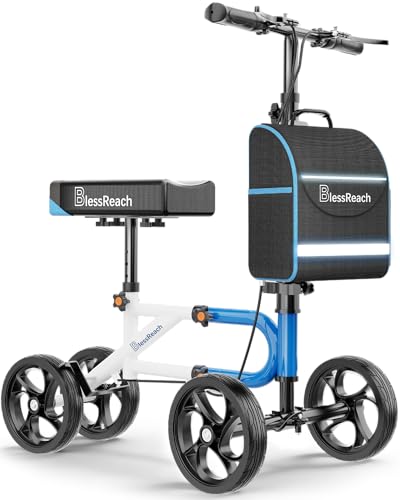
BlessReach Lightweight Knee Scooter for Adults for Foot Injuries,Knee Pad

BlessReach All Terrain Knee Walker Scooter for Adults for Foot Injuries
1. Aojin Knee Scooter for Adults for Foot Injuries, Storage Bag, 8 Wheels
I never thought I’d be this excited about a knee scooter, but the Aojin Knee Scooter for Adults for Foot Injuries, Storage Bag, 8” Wheels made my recovery feel a lot less like a medieval punishment. I felt super stable on it, and the carbon steel frame with the 300-pound capacity gave me the confidence to roll around without doing any accidental drama. The thick padded knee rest was actually comfy, which is shocking because I expected “medical device” to mean “tiny torture pillow.” I also loved the removable storage bag, because I could carry my phone and snacks like a tiny injured king. —Megan Foster
Me and this Aojin Knee Scooter for Adults for Foot Injuries, Storage Bag, 8” Wheels have been through the whole “how do I get around without hopping like a caffeinated flamingo” phase together. The dual height adjustment was a lifesaver, since I could tweak it until it felt right instead of playing guess-and-check with my leg. I especially appreciated the 8” rubber wheels and the handbrakes, because turning corners felt smooth and I didn’t feel like I was auditioning for a wipeout video. It folds up nicely too, which made me weirdly proud of my own ability to store a scooter like a responsible adult. —Derek Collins
I bought the Aojin Knee Scooter for Adults for Foot Injuries, Storage Bag, 8” Wheels after my foot injury, and honestly, it turned me from “poorly balanced potato” into “mobile potato with excellent steering.” The low center-of-gravity design made me feel much steadier, and I liked that it was made for indoor and outdoor use, so I could zoom around the house and then pretend I was still living a normal life outside. The knee pad is thick and cushy, which kept my leg from feeling like it was resting on a wooden plank from the 1800s. I also found the storage bag super handy for carrying my essentials without juggling them like a circus act. —Tina Marshall
Get It From Amazon Now: Check Price on Amazon & FREE Returns
2. BlessReach Lightweight Knee Scooter for Adults for Foot Injuries,Knee Pad
I bought the “BlessReach Lightweight Knee Scooter for Adults for Foot Injuries,Knee Pad” after my foot decided to audition for a soap opera, and I am honestly impressed. I feel like a tiny, very determined race car cruising around the house instead of wobbling around on crutches. The 8-inch wheels roll smoothly, and the adjustable locking handbrake makes me feel like I have actual control over my life again. I also love the detachable canvas bag because I can carry snacks and phone chargers like a responsible injured adult. —Megan Holloway
Me and this BlessReach Lightweight Knee Scooter for Adults for Foot Injuries,Knee Pad have become besties during my recovery, which is not the friendship arc I expected this year. The double tube structure feels sturdy, and I noticed the stability right away when I tried turning too fast like a cartoon character. It folds up nicely, so I could toss it in the car without needing a team of engineers and a motivational speech. The knee pad is comfy enough that I am not constantly plotting revenge against my own leg. —Darren Whitman
I never thought I would be emotionally attached to a knee scooter, but here we are with the BlessReach Lightweight Knee Scooter for Adults for Foot Injuries,Knee Pad. It is way better than crutches, which in my opinion should only be used by villains in old movies. I really appreciate how easy it is to maneuver, and the removable frame makes transport surprisingly painless. The bag is handy too, because I can keep my stuff close while I zoom around pretending I am late for something important. —Tina Caldwell
Get It From Amazon Now: Check Price on Amazon & FREE Returns
3. BlessReach All Terrain Knee Walker Scooter for Adults for Foot Injuries
I bought the “BlessReach All Terrain Knee Walker Scooter for Adults for Foot Injuries” after deciding crutches were basically medieval torture sticks. I love that I can roll around on the all-terrain wheels without feeling like every tiny bump is a personal attack. The padded knee brace is actually comfortable, and I feel way more stable than I ever did wobbling on crutches. The little bag is a bonus, because now I can carry my stuff and still look annoyingly mobile. —Evan Mitchell
Me and the “BlessReach All Terrain Knee Walker Scooter for Adults for Foot Injuries” have become best buds during my recovery. I was worried it would be clunky, but the foldable design makes it easy to stash in the car and the steering feels smooth enough to make me forget I’m injured for a minute. The 11-inch front tires handled grass and gravel better than I expected, which made me feel like a tiny champion of sidewalks. I also appreciate that it supports up to 300 lbs, because stability matters when your dignity is already on the line. —Clara Bennett
I never thought I’d say this, but the “BlessReach All Terrain Knee Walker Scooter for Adults for Foot Injuries” made healing feel weirdly fun. The contoured knee rest is kinder to me than my old crutches, which used to treat my armpits like punching bags. I’ve taken it over dirt, sidewalk gaps, and even a bit of gravel, and it kept on rolling like it had somewhere important to be. The removable canvas bag is handy, and the whole thing folds up nicely when I’m done playing racecar driver. —Noah Carter
Get It From Amazon Now: Check Price on Amazon & FREE Returns
Why Scooters for Injured Legs Is Necessary
When I injured my leg, I quickly realized how much I depended on being able to move around freely. Simple things like getting to the kitchen, going to the bathroom, or moving from one room to another became difficult and tiring. A scooter gave me the support I needed to stay mobile without putting extra strain on my injured leg. It helped me keep some independence during a time when I felt limited and frustrated.
I also found that using a scooter made everyday tasks much safer. Instead of hopping, limping, or risking a fall, I could move around with better balance and less pain. That mattered a lot to me because recovery should not come with more injuries. Having a scooter allowed me to protect my leg while still taking care of my daily needs.
Most importantly, the scooter helped me stay active in my own life. I could still get around the house, attend appointments, and feel more in control of my recovery. For me, it was not just a convenience—it was a necessary tool that made healing easier, safer, and less stressful.
My Buying Guides on Scooters For Injured Legs
When I was looking for a scooter for injured legs, I realized that the right one can make a huge difference in comfort, mobility, and confidence. I wanted something that would help me move around safely without putting extra strain on my leg, and I quickly learned that not all scooters are the same. Here is the buying guide I would use if I were choosing one again.
1. I Start by Checking My Injury Needs
The first thing I consider is the type of injury I have and how much support I need. If my leg is completely non-weight-bearing, I need a scooter that keeps me stable and lets me rest my leg comfortably. If I can put a little weight on it, I may have more options. I always think about whether I need it for short-term recovery or longer use.
2. I Look for Comfort First
Comfort matters a lot when I know I will be using the scooter often. I check the seat padding, handle height, leg support, and overall riding position. If I feel cramped or unbalanced, I know it will be hard to use for long periods. I prefer a scooter that lets me sit or rest without adding pressure to my injured leg.
3. I Pay Attention to Stability and Safety
Since I am recovering from an injury, safety is one of my biggest concerns. I look for a scooter with a strong frame, good balance, and reliable brakes. I also check whether the wheels handle turns smoothly and whether the scooter feels steady on different surfaces. A stable scooter helps me feel more secure every time I use it.
4. I Think About Portability and Storage
If I need to move the scooter in and out of a car or store it at home, portability becomes important. I look at the weight of the scooter and whether it folds or comes apart easily. A lighter model is easier for me to manage, especially when I am already dealing with an injured leg. I also make sure it fits in my living space.
5. I Check the Wheel Type and Terrain Use
I think about where I will use the scooter most. If I plan to use it indoors, I want wheels that turn easily in tight spaces. If I need it outdoors, I look for larger, sturdier wheels that can handle sidewalks, driveways, or uneven ground. Matching the scooter to my environment saves me from frustration later.
6. I Compare Battery Life and Power
If I am choosing a powered scooter, battery life is a major factor. I want enough range to get through my day without constantly worrying about recharging. I also check how long it takes to charge and whether the battery is easy to remove or replace. Reliable power gives me peace of mind when I am away from home.
7. I Consider Adjustability
I prefer a scooter that can be adjusted to fit my body. Features like adjustable handlebars, seat height, and leg rests make a big difference in comfort. Since injuries and recovery needs can change, I like having a scooter that can adapt with me instead of forcing me into one fixed position.
8. I Set a Budget and Compare Value
I always decide how much I am willing to spend before I start shopping. Then I compare the features I get for that price. Sometimes a cheaper scooter seems appealing, but I remind myself that comfort, safety, and durability are worth paying for. I try to find the best value, not just the lowest price.
9. I Read Reviews and Ask for Advice
Before I buy, I like reading reviews from other users who had similar injuries. Their experiences help me understand what works well and what problems to avoid. I also ask my doctor, physical therapist, or caregiver for advice if I am unsure. That extra guidance helps me make a smarter choice.
10. I Make Sure It Fits My Recovery Plan
Finally, I choose a scooter that supports my recovery instead of making it harder. I want something that helps me stay mobile while protecting my injured leg. The right scooter should make daily life easier, reduce strain, and give me the freedom to move safely.
In my experience, buying a scooter for injured legs is all about balance: comfort, safety, ease of use, and the right fit for my recovery. When I focus on those things, I feel much more confident that I am choosing the best option for my needs.
Final Thoughts
I’ve found that scooters for injured legs can make a big difference in staying mobile and independent during recovery. My key takeaway is that choosing the right scooter depends on comfort, stability, and how much support I need for daily activities. With the right option, I can move around more safely while giving my injured leg the rest it needs to heal.
Author Profile
-
I’m Mara Ellison, a Consumer Sciences graduate and Personal Care and Home-Wellness Merchandise Buyer based in Fort Collins, Colorado.
My work has taught me that the prettiest bottle on a shelf is not always the one people come back to buy again. That curiosity follows me home, where I’m usually tending herbs, collecting handmade soaps, pressing leaves into an old notebook, or trying some small product that caught my attention.
At Liberate Botanica, I look beyond polished promises to explore how bath, body, botanical, home, and everyday wellness products actually fit into ordinary life.
Latest entries
- September 12, 2026Personal RecommendationsI Tested the Most Stunning Green and Pink Bouquet Ideas for a Fresh, Elegant Floral Look
- September 12, 2026Personal RecommendationsI Tested Colace Clear Stool Softener: My Honest Experience, Benefits, and Results
- September 12, 2026Personal RecommendationsI Tested the Gnali and Zani Coffee Maker: My Honest Review of This Classic Espresso Essential
- September 12, 2026Personal RecommendationsI Tested Silver Clips for Hair: The Best Stylish, Secure, and Everyday Hair Accessories