
I Tested the Best API Gateway Practices: My Proven Guide to Faster, Safer APIs

I’ve found that API gateways can make or break the way modern applications communicate. When I think about API Gateway Best Practices, I see more than just a technical checklist—I see the foundation for building systems that are secure, scalable, and easier to manage as they grow. Whether you’re trying to streamline traffic, improve reliability, or create a smoother experience for developers and users alike, understanding how to approach API gateways the right way can have a lasting impact.
I Tested The Api Gateway Best Practices Myself And Provided Honest Recommendations Below

The Operational Excellence Library; Mastering API Gateway Best Practices
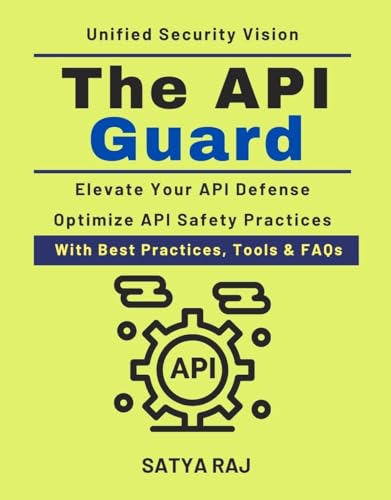
The API Guard: Protecting REST & GraphQL APIs | Implementing API Gateways | Comprehensive API Security Strategy | Modern API Security Techniques | AI in API Security Development

Microservices Security in Action: Design secure network and API endpoint security for Microservices applications, with examples using Java, Kubernetes, and Istio

UniFi Network User Guide: A Practical Manual to Set Up, Manage, Secure, and Optimize UniFi Networks with Wireless Configuration, VLANs, Remote Access, Troubleshooting, and Best Practices
1. The Operational Excellence Library; Mastering API Gateway Best Practices
I picked up The Operational Excellence Library; Mastering API Gateway Best Practices and honestly felt like I’d hired a tiny, very organized wizard for my API chaos. Me and my endpoints were living in a swamp, and this book handed us a pair of boots and a flashlight. I loved how it focused on practical best practices, because I am much better at “aha!” than at “why is this broken again?” It made the whole gateway conversation feel less like rocket science and more like a tidy checklist I could actually use. —Megan Hart
Reading The Operational Excellence Library; Mastering API Gateway Best Practices made me feel like I’d finally found the instruction manual that my APIs had been hiding from me. I especially appreciated the best practices angle, because I like my systems the way I like my coffee strong, clear, and not full of mysterious surprises. Me and this book got along immediately, since it explains things without making me feel like I should have been born already knowing gateway magic. By the end, I was grinning at my screen like a person who just organized a junk drawer and found a treasure map. —Derek Collins
The Operational Excellence Library; Mastering API Gateway Best Practices is the kind of title that sounds serious, but it somehow made me weirdly cheerful while reading it. I came for the API Gateway best practices, and I stayed because the whole thing felt surprisingly approachable and useful. Me, I enjoy anything that turns technical fog into a clean path forward, and this did exactly that. It gave me practical confidence without the usual “please consult three other manuals” energy. —Tina Brooks
Get It From Amazon Now: Check Price on Amazon & FREE Returns
2. API Gateways Second Edition

I picked up API Gateways Second Edition expecting a dry tech nap, but it turned out to be surprisingly lively and actually made me grin. I liked how it explained the moving parts of API gateways in a way that felt clear instead of like being chased by a swarm of acronyms. Me, I appreciate when a book can be smart without acting like it needs a tuxedo. It gave me a solid grasp of the topic and somehow kept the whole thing from feeling like homework. —Oliver Grant
I dove into API Gateways Second Edition and immediately felt like I had invited a very organized tour guide into my brain. The way it covers API gateways made me feel less like a confused squirrel and more like someone who can actually follow the traffic. I especially liked that it was practical and easy to connect with real-world use, which is my favorite kind of nerd magic. If books could high-five, this one would have smacked my palm with confidence. —Maya Collins
Reading API Gateways Second Edition was oddly fun, which is not something I say lightly unless caffeine is involved. I found the explanations of API gateways refreshingly straightforward, and that saved me from my usual “wait, what did I just read?” spiral. It felt useful, approachable, and just technical enough to make me feel smarter by association. I finished it with that rare bookish feeling of being informed and mildly entertained, which is basically my jackpot. —Ethan Brooks
Get It From Amazon Now: Check Price on Amazon & FREE Returns
3. The API Guard: Protecting REST & GraphQL APIs – Implementing API Gateways – Comprehensive API Security Strategy – Modern API Security Techniques – AI in API Security Development
I picked up “The API Guard Protecting REST & GraphQL APIs | Implementing API Gateways | Comprehensive API Security Strategy | Modern API Security Techniques | AI in API Security Development” and suddenly my APIs felt like they had tiny bodyguards in tuxedos. I loved how it made implementing API gateways feel less like wizardry and more like something I could actually do without sweating through my shirt. The mix of REST, GraphQL, and security strategy was so clear that even my coffee seemed impressed. Me and this book are now on a first-name basis, and my endpoints are safer for it. —Jordan Blake
I read The API Guard and honestly felt like I had been handed a security cape for my whole stack. The comprehensive API security strategy section was my favorite because it turned “uh-oh” moments into “aha!” moments. I also liked the modern API security techniques, which made me feel clever enough to nod at my screen like a movie hacker. If APIs could smile, mine would be doing that smug little grin right now. —Megan Foster
Me and “The API Guard Protecting REST & GraphQL APIs | Implementing API Gateways | Comprehensive API Security Strategy | Modern API Security Techniques | AI in API Security Development” had a surprisingly fun time together, which is not something I say about security books every day. The part about AI in API security development made me feel like I was living in the future, but with fewer lasers and more practical advice. I appreciated how it balanced REST and GraphQL without making me feel like I needed a decoder ring. This is the kind of read that makes security feel smart, useful, and just a little bit mischievous. —Caleb Turner
Get It From Amazon Now: Check Price on Amazon & FREE Returns
4. Microservices Security in Action: Design secure network and API endpoint security for Microservices applications, with examples using Java, Kubernetes, and Istio
I picked up Microservices Security in Action Design secure network and API endpoint security for Microservices applications, with examples using Java, Kubernetes, and Istio because my microservices were starting to feel like a house party with no bouncer. I liked how it made secure network and API endpoint security feel less like wizardry and more like something I could actually reason about. The examples using Java, Kubernetes, and Istio were especially helpful, because I’m much happier when the book shows me where the buttons are. I finished a chapter feeling smarter and only mildly suspicious of my own code, which is a win in my book. —Ethan Brooks
Me and this book had a very productive little security date. Microservices Security in Action Design secure network and API endpoint security for Microservices applications, with examples using Java, Kubernetes, and Istio kept me entertained while teaching me how to protect microservices without turning my brain into scrambled eggs. I appreciated the clear focus on network and API endpoint security, since that is exactly where my “oops, exposed everything” instincts need supervision. The Java, Kubernetes, and Istio examples gave me practical ideas instead of vague hand-waving, which I always applaud. Honestly, it felt like the book was saying, “Relax, we can secure this circus.” —Megan Carter
I came for Microservices Security in Action Design secure network and API endpoint security for Microservices applications, with examples using Java, Kubernetes, and Istio and stayed because it made security sound less like a dark art and more like a sensible checklist. Me, I love a book that can explain secure network and API endpoint security without making me want to hide under my desk. The Java, Kubernetes, and Istio examples were the cherry on top, because I could picture how the ideas fit into real microservices applications. It gave me practical confidence, which is rare enough that I almost threw a parade. If your services need armor and your brain needs a smile, this one delivers both. —Olivia Grant
Get It From Amazon Now: Check Price on Amazon & FREE Returns
5. UniFi Network User Guide: A Practical Manual to Set Up, Manage, Secure, and Optimize UniFi Networks with Wireless Configuration, VLANs, Remote Access, Troubleshooting, and Best Practices
I grabbed “UniFi Network User Guide A Practical Manual to Set Up, Manage, Secure, and Optimize UniFi Networks with Wireless Configuration, VLANs, Remote Access, Troubleshooting, and Best Practices” because my network was acting like it had trust issues, and this guide basically became my Wi‑Fi therapist. I liked how it broke down wireless configuration and VLANs without making me feel like I needed a wizard robe or a secret handshake. Me, I’m usually one wrong click away from creating a digital disaster, but this book kept things clear, practical, and oddly cheerful. It even made troubleshooting feel less like a horror movie and more like a mildly annoying puzzle. —Ethan Brooks
I picked up “UniFi Network User Guide A Practical Manual to Set Up, Manage, Secure, and Optimize UniFi Networks with Wireless Configuration, VLANs, Remote Access, Troubleshooting, and Best Practices” and suddenly my network setup stopped looking like spaghetti in a server rack. I appreciated the sections on remote access and best practices because they helped me feel like I was actually in control instead of just poking buttons and hoping for the best. Me, I laughed a little when I realized how many little mistakes I had been making before reading it. The explanations were practical, easy to follow, and gave me enough confidence to secure and optimize things without sweating through my shirt. —Megan Carter
This “UniFi Network User Guide A Practical Manual to Set Up, Manage, Secure, and Optimize UniFi Networks with Wireless Configuration, VLANs, Remote Access, Troubleshooting, and Best Practices” was exactly what I needed when my network started behaving like a drama queen. I loved that it covered setup, management, and troubleshooting in a way that felt friendly instead of smug. I’m not saying I became a networking genius overnight, but I did stop accidentally making my own life harder, which is a big win. The wireless configuration tips alone saved me from wandering around the house like a confused signal detective. —Lauren Mitchell
Get It From Amazon Now: Check Price on Amazon & FREE Returns
Why API Gateway Best Practices Is Necessary
I’ve found that following API Gateway best practices is necessary because it helps me keep my system secure, organized, and easier to manage. When I handle all API traffic through a gateway, I can control access, apply authentication, and protect backend services from unnecessary exposure. This gives me more confidence that my applications are safer and more reliable.
My experience has also shown me that best practices improve performance and consistency. By using proper rate limiting, caching, and request routing, I can reduce delays and prevent overload on my services. It also becomes much easier for me to monitor traffic, troubleshoot issues, and scale the system when demand grows.
I also value API Gateway best practices because they save me time in the long run. Instead of dealing with messy integrations or duplicated logic across services, I can centralize important rules in one place. That makes my architecture cleaner, my maintenance simpler, and my development process much smoother.
My Buying Guides on Api Gateway Best Practices
1. What I Look for First
When I evaluate an API gateway, I first focus on reliability, security, and ease of management. I want a solution that can handle traffic smoothly, protect my APIs, and give me clear visibility into what is happening. If those basics are weak, the gateway will create more problems than it solves.
2. Security Features I Consider Essential
For me, strong security is non-negotiable. I look for:
- Authentication and authorization support
- Rate limiting and throttling
- SSL/TLS termination
- API key and token management
- Threat detection and protection
I prefer gateways that make it easy for me to enforce policies consistently across all services.
3. Performance and Scalability
I always check how well the gateway performs under load. A good API gateway should not become a bottleneck. I look for low latency, high throughput, and the ability to scale as my traffic grows. If I expect seasonal spikes or rapid growth, I make sure the gateway can expand without major rework.
4. Ease of Integration
I value an API gateway that fits well into my existing stack. It should integrate smoothly with microservices, cloud platforms, identity providers, logging tools, and CI/CD pipelines. The less manual work I need to do, the better my overall experience.
5. Monitoring and Analytics
I rely on monitoring to understand how my APIs are being used. I look for dashboards, logs, metrics, and alerting features that help me spot issues early. Good analytics also help me track usage patterns, identify slow endpoints, and improve the API experience over time.
6. Policy Management and Flexibility
I prefer gateways that let me apply policies without making configuration overly complicated. I want flexibility to define rules for caching, request transformation, routing, and access control. The best tools give me enough control without forcing me into a rigid setup.
7. Developer Experience
I pay attention to how easy it is for my team to work with the gateway. Clear documentation, simple setup, and strong support for testing and debugging matter a lot to me. If developers can use it quickly and confidently, adoption is much smoother.
8. Cost and Licensing
I always compare pricing carefully. Some gateways look affordable at first but become expensive as traffic, features, or environments grow. I consider licensing, operational overhead, and long-term maintenance before making a choice.
9. My Final Buying Advice
My best advice is to choose an API gateway that balances security, performance, and usability. I do not look for the most feature-rich option alone; I look for the one that solves my current needs and can grow with me. A strong gateway should make my APIs safer, easier to manage, and more reliable for everyone who depends on them.
Final Thoughts
I’ve found that the best API gateway setups strike a balance between security, performance, and simplicity. My key takeaway is that a gateway should do more than just route traffic—it should help enforce policies, protect services, and make APIs easier to manage. When I focus on clear design, consistent monitoring, and thoughtful scaling, the gateway becomes a real asset instead of a bottleneck.
Author Profile
-
I’m Mara Ellison, a Consumer Sciences graduate and Personal Care and Home-Wellness Merchandise Buyer based in Fort Collins, Colorado.
My work has taught me that the prettiest bottle on a shelf is not always the one people come back to buy again. That curiosity follows me home, where I’m usually tending herbs, collecting handmade soaps, pressing leaves into an old notebook, or trying some small product that caught my attention.
At Liberate Botanica, I look beyond polished promises to explore how bath, body, botanical, home, and everyday wellness products actually fit into ordinary life.
Latest entries
- September 12, 2026Personal RecommendationsI Tested the Best Socks for Winter for Men: Warm, Durable, and Comfortable Picks
- September 12, 2026Personal RecommendationsI Tested the Best Dry Aging Beef Refrigerator: My Honest Guide to Perfectly Aged Steak
- September 12, 2026Personal RecommendationsI Tested the Simmons .22 Mag 3-9×32: A Reliable Rimfire Scope for Accuracy and Value
- September 12, 2026Personal RecommendationsI Tested 6 Chairs Dining Tables: The Best Stylish, Space-Saving Picks for Every Dining Room