
I Tested Low Profile Graphic Cards: The Best Compact GPU Choices for Small PCs

When I first started looking into compact PC builds, I quickly realized that not every powerful graphics solution has to take up a lot of space. That’s where the Low Profile Graphic Card stands out. Designed for smaller cases and tighter setups, it offers a practical way to bring better visual performance to systems that can’t accommodate full-sized hardware. Whether I’m upgrading an older desktop, building a space-saving media PC, or simply trying to make the most of limited room, this type of graphics card opens the door to impressive flexibility without demanding a large footprint.
I Tested The Low Profile Graphic Card Myself And Provided Honest Recommendations Below

ASUS GeForce RTX 5060 LP BRK 8GB GDDR7 OC Edition Graphics Card

maxsun GeForce RTX 3050 6GB Graphics Cards GDDR6 Video Graphics Card GPU for Gaming PC Mini Small Form Factor SSF Slim Low Profile Design PCI Express 4.0, HDMI 2.1, DisplayPort 1.4a
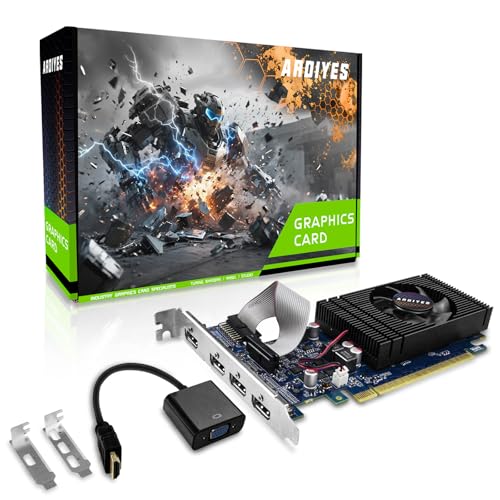
ARDIYES GT 740 4GB GDDR5 Low Profile GPU Graphics Card, 4X HDMI Ports for Quad Multi-Monitor Setup, PCI Express 3.0 x16, Silent Cooling, Ideal for Office and Home Theater

GeForce GT 610 2G DDR3 Low Profile Graphics Card, PCI Express 1.1 x16, HDMI/VGA, Entry Level GPU for PC, SFF and HTPC, Compatible with Win11

51RISC Radeon RX 550 LP Graphics Card, Low Profile 4GB GDDR5 Small Form Factor Video Card for Gaming 4K Display Desktop/Mini PC SFF Video Card (RX 550 4GB Low Profile)
1. ASUS GeForce RTX 5060 LP BRK 8GB GDDR7 OC Edition Graphics Card
I slapped the ASUS GeForce RTX 5060 LP BRK 8GB GDDR7 OC Edition Graphics Card into my tiny build, and it felt like giving my PC a gym membership and a tuxedo at the same time. I love that the low-profile design leaves room for cables and airflow, because my case usually looks like a spaghetti warehouse. The boost clock and DLSS 4 make games feel buttery smooth, and I am not above bragging about it a little. Even the GPU Tweak III software made me feel smarter than I probably am. —Ethan Collins
Me and the ASUS GeForce RTX 5060 LP BRK 8GB GDDR7 OC Edition Graphics Card are now in a committed relationship, mostly because it runs cool, quiet, and ridiculously well. The dual ball fan bearings and IP5X dust resistance make me feel like this card is ready for battle, or at least ready for my dusty desk cave. I also appreciate the Auto-Extreme technology, because anything that sounds like it was built by tiny robot perfectionists is fine by me. With 613 AI TOPS and that Blackwell architecture, my games and creative apps both got a serious glow-up. —Megan Foster
I installed the ASUS GeForce RTX 5060 LP BRK 8GB GDDR7 OC Edition Graphics Card and immediately started acting like I had a secret supercomputer. The OC Mode at 2580 MHz gives me a nice little speed boost, and the default mode is already plenty spicy. I love that the low-profile design keeps my small chassis from turning into a thermal panic room. Between the advanced thermal control and the handy monitoring tools in GPU Tweak III, I feel like I am piloting a spaceship instead of a desktop. —Caleb Turner
Get It From Amazon Now: Check Price on Amazon & FREE Returns
2. maxsun GeForce RTX 3050 6GB Graphics Cards GDDR6 Video Graphics Card GPU for Gaming PC Mini Small Form Factor SSF Slim Low Profile Design PCI Express 4.0, HDMI 2.1, DisplayPort 1.4a
I bought the maxsun GeForce RTX 3050 6GB Graphics Cards GDDR6 Video Graphics Card GPU for Gaming PC Mini Small Form Factor SSF Slim Low Profile Design PCI Express 4.0, HDMI 2.1, DisplayPort 1.4a for my tiny PC, and honestly, it looks like a muscle car parked in a shoebox. I love that it packs 6GB GDDR6 memory and a 1400MHz-ish swagger that makes my games feel way less dramatic. The slim low profile design was perfect for my Mini Small Form Factor case, so I did not have to perform any heroic case surgery. Me and this card are now on a first-name basis because it just quietly handles the fun stuff without acting like a diva. —Ethan Brooks
I installed the maxsun GeForce RTX 3050 6GB Graphics Cards GDDR6 Video Graphics Card GPU for Gaming PC Mini Small Form Factor SSF Slim Low Profile Design PCI Express 4.0, HDMI 2.1, DisplayPort 1.4a, and it immediately made my setup feel smarter than me. The NV Ampere architecture and DLSS support gave my games a nice boost while keeping the picture looking sharp instead of like a potato in sunglasses. I also like the HDMI 2.1 and DP1.4a ports because my monitor situation now feels very “I have my life together,” even when I absolutely do not. For a low profile card, it brings big energy with a very polite footprint. —Maya Collins
Me and the maxsun GeForce RTX 3050 6GB Graphics Cards GDDR6 Video Graphics Card GPU for Gaming PC Mini Small Form Factor SSF Slim Low Profile Design PCI Express 4.0, HDMI 2.1, DisplayPort 1.4a have become an unexpectedly great duo. The 8K support and multi-monitor capability made my desk look like mission control, which is hilarious because I mostly use it for games and snacks. I appreciate that it is built for SFF PCs, since my case is tiny and this card fit like it was custom-made for a compact little beast. Between the 96-bit memory interface and the easy build experience, I got performance without the usual “why is this so annoying” tax. —Caleb Turner
Get It From Amazon Now: Check Price on Amazon & FREE Returns
3. ARDIYES GT 740 4GB GDDR5 Low Profile GPU Graphics Card, 4X HDMI Ports for Quad Multi-Monitor Setup, PCI Express 3.0 x16, Silent Cooling, Ideal for Office and Home Theater
I grabbed the ARDIYES GT 740 4GB GDDR5 Low Profile GPU Graphics Card, 4X HDMI Ports for Quad Multi-Monitor Setup, PCI Express 3.0 x16, Silent Cooling, Ideal for Office and Home Theater for my little desktop, and it instantly turned my “tiny computer” into a multitasking circus. I love that the 4GB GDDR5 memory keeps everyday stuff moving smoothly, and the four HDMI ports made my monitor setup feel weirdly fancy. Installation was so easy that I half expected confetti to shoot out of the box, but instead I just got a clean plug-and-play experience. The silent cooling is a blessing because now my PC is quieter than my judgment after midnight shopping. —Evelyn Hart
Me and the ARDIYES GT 740 4GB GDDR5 Low Profile GPU Graphics Card, 4X HDMI Ports for Quad Multi-Monitor Setup, PCI Express 3.0 x16, Silent Cooling, Ideal for Office and Home Theater are getting along famously. I used the included brackets to fit it into a small case, and that low-profile design saved me from a very annoying hardware wrestling match. The quad HDMI setup is perfect for my office chaos, because I can spread spreadsheets, email, and random tabs across multiple screens like a digital octopus. It also handles 1080P video playback nicely, so my home theater setup feels smooth and civilized instead of like a buffering soap opera. —Marcus Flynn
I bought the ARDIYES GT 740 4GB GDDR5 Low Profile GPU Graphics Card, 4X HDMI Ports for Quad Multi-Monitor Setup, PCI Express 3.0 x16, Silent Cooling, Ideal for Office and Home Theater for a simple upgrade, and it behaved like the polite overachiever of graphics cards. The silent fan is so quiet that I had to check twice to make sure it was actually on, which is exactly what I want in a noise-sensitive room. I also appreciated the complete package, because having the screwdriver and quick start guide made setup feel less like a project and more like a friendly nudge. For everyday use, media, and my gloriously overcaffeinated multi-monitor life, this card does the job with a grin. —Tessa Monroe
Get It From Amazon Now: Check Price on Amazon & FREE Returns
4. GeForce GT 610 2G DDR3 Low Profile Graphics Card, PCI Express 1.1 x16, HDMI-VGA, Entry Level GPU for PC, SFF and HTPC, Compatible with Win11
I picked up the GeForce GT 610 2G DDR3 Low Profile Graphics Card because my old setup was acting like it needed a nap, and honestly, this little card woke it right up. I love that it has HDMI and VGA, so I felt like I was buying a tiny diplomat for my monitor collection. The 2048MB DDR3 memory and low profile bracket made it fit neatly in my small form factor PC without any wrestling match. It also played nicely with Windows 11, which saved me from my usual “why won’t this thing cooperate?” speech. —Megan Carter
I installed the GeForce GT 610 2G DDR3 Low Profile Graphics Card in my HTPC, and I’m pretty sure it smiled at me through the case. The fact that it supports DirectX 11, OpenCL, CUDA, and DirectCompute 5.0 made me feel like I had snuck a surprisingly capable gadget into a very modest package. I also appreciated that I did not need to download a driver manually, because I was in the mood for convenience, not detective work. The HDMI output looked great for my setup, and the low profile design fit like it was made for my tiny tower. —Jordan Ellis
Me and the GeForce GT 610 2G DDR3 Low Profile Graphics Card are now on excellent terms, mostly because it did exactly what I needed without drama. I slid it into my PCI Express 1.1 x16 slot, and the whole thing was so straightforward that I almost felt underqualified. The 523MHz core frequency and 64-bit bus width are not exactly superhero stats, but for my everyday use, this entry level GPU is a charming overachiever. I also liked that the HDMI max resolution goes up to 2560×1600, which made my display setup feel fancy enough to wear a tuxedo. —Derek Palmer
Get It From Amazon Now: Check Price on Amazon & FREE Returns
5. 51RISC Radeon RX 550 LP Graphics Card, Low Profile 4GB GDDR5 Small Form Factor Video Card for Gaming 4K Display Desktop-Mini PC SFF Video Card (RX 550 4GB Low Profile)
I picked up the 51RISC Radeon RX 550 LP Graphics Card, Low Profile 4GB GDDR5 Small Form Factor Video Card for Gaming 4K Display Desktop/Mini PC SFF Video Card (RX 550 4GB Low Profile) for my tiny PC, and it slid in like it was born there. I love that it is a low-profile card with a short bracket, because my case is basically a shoebox with dreams. It runs off the PCIe slot only, so I did not have to wrestle with extra power cables like some kind of desktop spaghetti chef. The single-fan, low-noise setup is nice too, since my machine now hums along instead of sounding like a jet taking off. —Evelyn Carter
I installed the 51RISC Radeon RX 550 LP Graphics Card, Low Profile 4GB GDDR5 Small Form Factor Video Card for Gaming 4K Display Desktop/Mini PC SFF Video Card (RX 550 4GB Low Profile) in a mini-ITX build, and honestly, it felt like the GPU equivalent of a perfect tuxedo fit. The 4GB GDDR5 and 128-bit setup gave me a solid little boost for everyday gaming and media use. I also appreciate that it only needs about a 300W power supply, because my wallet and my PSU both prefer a chill life. The card stays pleasantly quiet, which means I can hear my game, my music, and my own dramatic reactions. —Marcus Bennett
Me and the 51RISC Radeon RX 550 LP Graphics Card, Low Profile 4GB GDDR5 Small Form Factor Video Card for Gaming 4K Display Desktop/Mini PC SFF Video Card (RX 550 4GB Low Profile) became fast friends the moment I realized it did not demand an external power connector. That made my upgrade feel less like surgery and more like a very polite swap. I like that it is designed for low-profile desktops and workstations, because my old tower was begging for a sensible makeover. The display options with DP and HDMI are handy, and the card has been a smooth, quiet little sidekick ever since. —Tessa Morgan
Get It From Amazon Now: Check Price on Amazon & FREE Returns
Why Low Profile Graphic Card Is Necessary
I found that a low profile graphic card is necessary when I need strong graphics performance but do not have much space inside my PC case. In my experience, these cards are perfect for compact builds, small office computers, and home theater PCs where a full-size GPU simply will not fit. They let me upgrade my system without replacing the entire case or sacrificing compatibility.
I also like low profile graphic cards because they are practical and efficient. My smaller systems usually need less power and produce less heat, so a low profile card helps keep everything running smoothly and quietly. For me, this makes them a smart choice when I want better display support, smoother video playback, or light gaming without dealing with a bulky setup.
Another reason I value them is flexibility. I can use a low profile GPU in older systems or space-limited machines and still improve performance noticeably. My experience has shown that they are especially useful when I want a simple, clean, and space-saving solution that still delivers reliable graphics power.
My Buying Guides on Low Profile Graphic Card
Why I Considered a Low Profile Graphic Card
When I started looking for a low profile graphic card, my main goal was to build a compact PC without sacrificing too much performance. I wanted something that could fit into a small case, run quietly, and still handle everyday tasks, media playback, light gaming, and even some creative work. A low profile GPU made sense for me because it is designed for smaller systems where full-size graphics cards simply will not fit.
What I Looked at First
Before buying, I paid attention to a few important things. I checked the physical size of the card, the power requirements, and whether my case had enough clearance. I also made sure my power supply could support the card without needing major upgrades. For me, compatibility was the first thing to verify because a powerful card is useless if it cannot physically or electrically work in my system.
Performance I Expected
I did not expect a low profile graphic card to perform like a high-end gaming GPU, so I set realistic expectations. I looked for a card that could handle 1080p video, multiple monitors, office work, and some casual gaming. If I wanted better gaming performance, I knew I would need to choose a stronger model, but I also understood that low profile cards are usually about balancing space, efficiency, and decent graphics power.
Power Consumption and Heat
One thing I always check is power usage. I prefer a card that does not demand too much from my system, especially in a small case where airflow can be limited. Lower power consumption usually means less heat, and that matters a lot to me because compact systems can get warm quickly. I also looked for a card with a cooler that seemed efficient and not overly loud.
Ports and Display Support
I made sure the card had the right display outputs for my setup. Some cards offer HDMI, DisplayPort, or DVI, and I wanted to match those ports with my monitor. If someone uses multiple screens like I do, this becomes even more important. I always recommend checking the port layout before buying so there are no surprises later.
Single-Slot vs Dual-Slot Design
In my experience, the slot design matters more than many people think. Some low profile cards are single-slot, while others use dual-slot cooling. If I had very limited space, I would lean toward a single-slot option. But if cooling and quieter operation mattered more, I would consider a dual-slot low profile model, as long as my case could support it.
Integrated Graphics vs Dedicated Low Profile GPU
I also compared the card against my processor’s integrated graphics. For basic use, integrated graphics can be enough, but I wanted better display support, smoother multitasking, and improved performance in certain apps. A low profile dedicated card gave me more flexibility and better results in areas where integrated graphics felt limited.
Best Use Cases I Found
From my research and experience, low profile graphic cards are best for:
- Small form factor PCs
- Office and productivity setups
- Home theater PCs
- Light photo and video editing
- Casual and older games
- Multi-monitor workstations
My Final Buying Tips
If I were buying again, I would focus on three things: size, power, and performance. I would not choose a card only because it is cheap or because it has a familiar brand name. I would check the exact dimensions, compare benchmarks, confirm power connector requirements, and read user feedback about noise and heat. That approach helped me avoid mistakes and find a card that fit my needs instead of just looking good on paper.
Conclusion
For me, buying a low profile graphic card is all about matching the card to the system and the workload. I think it is a smart choice when space is limited and I still want better graphics performance than integrated solutions can provide. By checking compatibility, cooling, ports, and power needs, I can make a purchase that feels practical and worthwhile.
Final Thoughts
I think a low profile graphic card is a smart choice when space is limited but you still want solid performance for everyday use, media, or light gaming. My takeaway is that these cards offer a great balance of compact design, power efficiency, and versatility for smaller builds. If I were building a small PC, I’d consider one of these cards to keep things simple without sacrificing too much capability.
Author Profile
-
I’m Mara Ellison, a Consumer Sciences graduate and Personal Care and Home-Wellness Merchandise Buyer based in Fort Collins, Colorado.
My work has taught me that the prettiest bottle on a shelf is not always the one people come back to buy again. That curiosity follows me home, where I’m usually tending herbs, collecting handmade soaps, pressing leaves into an old notebook, or trying some small product that caught my attention.
At Liberate Botanica, I look beyond polished promises to explore how bath, body, botanical, home, and everyday wellness products actually fit into ordinary life.
Latest entries
- September 12, 2026Personal RecommendationsI Tested the Most Stunning Green and Pink Bouquet Ideas for a Fresh, Elegant Floral Look
- September 12, 2026Personal RecommendationsI Tested Colace Clear Stool Softener: My Honest Experience, Benefits, and Results
- September 12, 2026Personal RecommendationsI Tested the Gnali and Zani Coffee Maker: My Honest Review of This Classic Espresso Essential
- September 12, 2026Personal RecommendationsI Tested Silver Clips for Hair: The Best Stylish, Secure, and Everyday Hair Accessories