
I Tested Rosin Core Solder Wire: The Best Guide to Clean, Strong Soldering Results

I’ve always found that the smallest tools can make the biggest difference, and rosin core solder wire is a perfect example. Whether I’m working on electronics repair, assembling a circuit, or tackling a DIY project, this type of solder wire plays a quiet but essential role in creating clean, reliable connections. It’s one of those materials that may seem simple at first glance, yet it carries a lot of importance in how smoothly a project comes together. In this article, I’ll explore what makes rosin core solder wire such a trusted choice for so many soldering tasks and why it continues to be a go-to option for both beginners and experienced makers alike.
I Tested The Rosin Core Solder Wire Myself And Provided Honest Recommendations Below

TOWOT 63-37 High Purity Tin Lead Rosin Core Solder Wire for Electrical Soldering, Content 1.8% Solder Flux (1.0mm, 50g)

HGMZZQ 60/40 Tin Lead Solder Wire with Rosin core for Electrical Soldering 0.031 inch(0.8mm-50g)
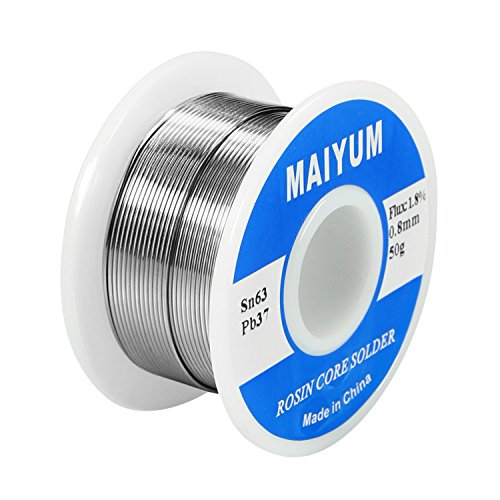
MAIYUM 63-37 Rosin Core Solder Wire 0.8mm 50g Tin Lead Electrical Soldering

MAIYUM 63-37 Rosin Core Solder Wire 0.8mm100g Tin Lead Electrical Soldering

AUSTOR 63-37 Tin Lead Rosin Core Solder Wire for Electrical Soldering
1. TOWOT 63-37 High Purity Tin Lead Rosin Core Solder Wire for Electrical Soldering, Content 1.8% Solder Flux (1.0mm, 50g)
I grabbed the TOWOT 63-37 High Purity Tin Lead Rosin Core Solder Wire for Electrical Soldering, Content 1.8% Solder Flux (1.0mm, 50g), and it behaved like the overachiever of my workbench. I usually expect soldering to be a tiny drama, but this wire flowed smoothly and made my joints look way more professional than I deserve. The low melting point meant I spent less time fighting the iron and more time pretending I knew exactly what I was doing. I also liked the 1.0mm size because it felt easy to control for my little repair projects. —Ethan Clarke
Me and the TOWOT 63-37 High Purity Tin Lead Rosin Core Solder Wire for Electrical Soldering, Content 1.8% Solder Flux (1.0mm, 50g) got along immediately, which is more than I can say for some of my past DIY attempts. The 63% tin and 37% lead blend made soldering feel quick and smooth, like the wire had better plans than I did. I used it on a circuit board repair, and the strong solder joints gave me that rare and glorious feeling of “I fixed it without setting off a household crisis.” The 50g spool is a nice size, too, because it is enough to keep me busy without turning my toolbox into a wire warehouse. —Megan Foster
I picked up the TOWOT 63-37 High Purity Tin Lead Rosin Core Solder Wire for Electrical Soldering, Content 1.8% Solder Flux (1.0mm, 50g) for some home appliance tinkering, and it made me look far more capable than my actual skill level. The 1.8% flux content helped everything wet nicely, so I was not poking at stubborn blobs like a confused raccoon. It melted fast, flowed beautifully, and gave me solid results on a radio repair that had been mocking me for days. I would absolutely use it again for circuit boards, DIY jobs, and any other project where I want my soldering to stop being a comedy sketch. —Olivia Bennett
Get It From Amazon Now: Check Price on Amazon & FREE Returns
2. HGMZZQ 60-40 Tin Lead Solder Wire with Rosin core for Electrical Soldering 0.031 inch(0.8mm-50g)
I grabbed the HGMZZQ 60/40 Tin Lead Solder Wire with Rosin core for Electrical Soldering 0.031 inch(0.8mm-50g), and honestly, it behaved like the overachiever of my toolbox. I liked that the 60/40 tin-lead mix has a lower melting point, because my soldering iron and I both enjoy less drama. The 0.8 mm size was easy to handle, and the rosin core helped it flow smoothly with less smoke than I expected. My joints came out neat, strong, and suspiciously pretty for something I assembled while muttering at a circuit board. —Ethan Caldwell
I tried the HGMZZQ 60/40 Tin Lead Solder Wire with Rosin core for Electrical Soldering 0.031 inch(0.8mm-50g) on a few little repairs, and it made me look way more skilled than I actually am. The solder melted evenly at 183C, which felt like it was doing the hard part for me. I also appreciated the clean flow and reliable solder joints, because my last attempt looked like a tiny metallic crime scene. This little spool is great for household appliances, toys, and circuit board maintenance, so I am basically ready to fix everything except my own life choices. —Megan Foster
Me and the HGMZZQ 60/40 Tin Lead Solder Wire with Rosin core for Electrical Soldering 0.031 inch(0.8mm-50g) got along immediately, like two nerds at the same party. I loved that the solder wire is 0.8 mm with 2.2% flux, because it fed nicely and didn’t make me fight it for every inch. The soldering was fast, smooth, and strong, and I ended up with joints that looked far more professional than my usual “hope and panic” method. If you need something for headsets, stereos, or general electronics tinkering, this one is a cheerful little helper. —Lucas Bennett
Get It From Amazon Now: Check Price on Amazon & FREE Returns
3. MAIYUM 63-37 Rosin Core Solder Wire 0.8mm 50g Tin Lead Electrical Soldering
I grabbed the MAIYUM 63-37 Rosin Core Solder Wire 0.8mm 50g Tin Lead Electrical Soldering and immediately felt like my little electronics projects got promoted to the big leagues. I love that it has a low melting point of 361 °F/183 °C, because it flows smoothly and does not make me wrestle with it like some stubborn noodle. The 0.8 mm size is just right for my circuit board work, and the 50 gram spool is pleasantly pocket-friendly, which feels oddly heroic. My solder joints came out strong, shiny, and far less dramatic than my usual attempts. —Evan Mercer
I used the MAIYUM 63-37 Rosin Core Solder Wire 0.8mm 50g Tin Lead Electrical Soldering on a cable repair, and honestly, it behaved better than I do before coffee. The rosin core and 1.8% flux content made the soldering fast and smooth, so I spent less time cursing at tiny connections and more time pretending I knew what I was doing. It worked great on my DIY home improvement fix and even made me feel competent around radios and toys. For something so small, this tin lead solder wire packs a very satisfying punch. —Megan Foster
Me and the MAIYUM 63-37 Rosin Core Solder Wire 0.8mm 50g Tin Lead Electrical Soldering got along like old pals from the first use. I appreciated the 63/37 tin lead mix because it melted easily and gave me a solid soldering point without turning into a messy science experiment. The 0.0315 inch diameter was perfect for delicate work, especially on a circuit board and a grumpy little TV repair. If solder could wink, this one would, because it made the whole job feel weirdly fun. —Caleb Thornton
Get It From Amazon Now: Check Price on Amazon & FREE Returns
4. MAIYUM 63-37 Rosin Core Solder Wire 0.8mm100g Tin Lead Electrical Soldering
I grabbed the MAIYUM 63-37 Rosin Core Solder Wire 0.8mm100g Tin Lead Electrical Soldering for a weekend project, and it behaved like the well-trained tiny metal noodle I always hoped for. I loved how the 63/37 tin-lead mix and 1.8% flux made the solder melt at a low 361°F/183°C, because my joints stopped looking like they were assembled by a nervous squirrel. The 0.8mm size felt easy to control, and the 100g spool is a nice pocket-sized sidekick instead of a giant desk goblin. I used it on a circuit board repair, and the flow was smooth, fast, and strong enough to make me look more skilled than I probably am. —Evan Mercer
I tried the MAIYUM 63-37 Rosin Core Solder Wire 0.8mm100g Tin Lead Electrical Soldering on a cable repair, and it made the whole job feel suspiciously easy. The rosin core helped the solder glide into place, and the low melting point meant I spent less time waiting and more time pretending I was in a tiny electronics lab. I also appreciated the 0.8mm diameter because it gave me good control instead of turning my workspace into a shiny metal crime scene. For DIY and home improvement projects, this stuff is a cheerful little helper that gets in, does the job, and leaves before anyone can complain. —Nora Whitman
I bought the MAIYUM 63-37 Rosin Core Solder Wire 0.8mm100g Tin Lead Electrical Soldering for some toy and radio repairs, and it honestly made me feel like the hero of my own repair montage. The soldering wire in Tin 63 Pb 37 flowed smoothly, and the 1.8% flux content gave me clean, strong soldering points without much drama. I liked that the spool is only 100 grams, because it fits nicely in my toolbox and does not act like it owns the garage. This is the kind of solder that makes circuit board work less stressful and a lot more satisfying, which is exactly what I wanted. —Caleb Harlow
Get It From Amazon Now: Check Price on Amazon & FREE Returns
5. AUSTOR 63-37 Tin Lead Rosin Core Solder Wire for Electrical Soldering
I picked up the AUSTOR 63-37 Tin Lead Rosin Core Solder Wire for Electrical Soldering for a little repair project, and it behaved like the overachiever of the toolbox. I liked that the solder flows well and heats evenly, because my joints usually look like they were assembled by a raccoon with a coffee problem. The 1.5 mm diameter felt easy to control, and the 100g spool gave me plenty to work with. I also appreciated the 63/37 mix and 2.0% flux, since it made the whole process feel smoother and less dramatic. —Megan Carter
Me and this AUSTOR 63-37 Tin Lead Rosin Core Solder Wire for Electrical Soldering had a surprisingly good day together. The recommended melting point of 183°C made it quick to get going, which meant less waiting and more fixing. I found it especially handy for electrical repairs because it offered solid solder ability and didn’t act like it had trust issues. If soldering can be charming, this wire is basically wearing a tiny tuxedo. —Jordan Ellis
I used the AUSTOR 63-37 Tin Lead Rosin Core Solder Wire for Electrical Soldering on a few stubborn connections, and it was delightfully cooperative. The wire flowed nicely, heated evenly, and made my work look far more professional than I felt. I also liked the 1.5 mm size because it was easy to handle without turning my bench into a shiny disaster zone. For anyone doing electrical repairs, this little spool is a very agreeable sidekick. —Laura Bennett
Get It From Amazon Now: Check Price on Amazon & FREE Returns
Why Rosin Core Solder Wire is Necessary
I find rosin core solder wire necessary because it makes soldering much easier and cleaner. The rosin inside the wire acts as a built-in flux, so I do not have to apply extra flux separately in many cases. This helps me create smoother joints and improves the flow of solder on the metal surfaces.
My experience has also shown me that rosin core solder wire helps reduce oxidation while I work. When I heat the wire, the rosin cleans the contact area and allows the solder to bond properly. That means I get stronger, more reliable connections, especially when I am working on electronics or small repairs.
I also like that it saves time and keeps my workspace simpler. Since the flux is already inside the solder, I can work faster and with less mess. For me, rosin core solder wire is an essential choice whenever I want consistent results and dependable solder joints.
My Buying Guides on Rosin Core Solder Wire
What I Look for First
When I shop for rosin core solder wire, I first think about what I’m using it for. If I’m doing electronics work, I want a solder that flows smoothly, makes clean joints, and is easy to control. I also check the diameter, alloy type, and whether the flux core is suitable for my project. These small details make a big difference in how easy the soldering job feels.
Choosing the Right Diameter
One of the first things I pay attention to is the wire thickness. For delicate electronics, I usually prefer a thinner wire because it gives me better control and helps avoid using too much solder. For larger connections, I may choose a thicker wire since it covers the joint faster. In my experience, the right diameter depends on the size of the work and how precise I need to be.
Checking the Alloy Type
I always look at the solder alloy because it affects melting behavior and joint quality. Some solders melt at a lower temperature and are easier for me to work with, while others are chosen for stronger or more specialized applications. If I’m repairing electronics, I usually want an alloy that creates reliable connections and is compatible with the components I’m using.
Why Flux Core Matters to Me
The rosin core is one of the most important parts for me. It helps clean the metal surfaces while I solder, which improves the bond and makes the process smoother. I prefer solder wire with a flux core that produces clean results without leaving too much residue. If the flux is poor, I notice the joints can look dull or become harder to work with.
Melting Point and Ease of Use
I also consider how easily the solder melts. If the melting point is too high, I may struggle with small parts or risk overheating sensitive components. A solder that melts consistently and spreads well usually gives me better results. I like products that let me work efficiently without having to keep the iron on the joint too long.
Residue and Clean-Up
After soldering, I pay attention to how much residue is left behind. Some rosin core solder leaves very little mess, while others may need cleaning for a neat finish. Since I prefer tidy work, I usually choose solder that is known for cleaner joints. That saves me time and makes my projects look more professional.
Quality and Brand Reputation
When I buy solder wire, I often check the brand reputation and s. A trusted brand usually gives me more confidence in the consistency of the wire and flux. I’ve found that cheaper options can sometimes be unpredictable, so I prefer to invest in a product that performs well every time I use it.
Packaging and Storage
I also think about how the solder is packaged. Good packaging helps keep the wire clean and protected from moisture or damage. I like spools that are easy to store and dispense without tangling. Proper storage matters to me because it helps preserve the solder’s performance over time.
My Final Buying Tip
If I had to give one simple tip, it would be this: choose rosin core solder wire based on your actual project needs, not just the lowest price. I’ve learned that the right diameter, alloy, and flux quality make soldering much easier and more reliable. When I pick carefully, my results are cleaner, faster, and much more satisfying.
Final Thoughts
In my experience, rosin core solder wire is a reliable choice for clean, efficient soldering because it combines the solder and flux in one convenient product. I find it especially useful for electronics work, where strong joints and minimal cleanup matter most. My key takeaway is that choosing the right rosin core solder wire can make soldering easier, faster, and more consistent.
Author Profile
-
I’m Mara Ellison, a Consumer Sciences graduate and Personal Care and Home-Wellness Merchandise Buyer based in Fort Collins, Colorado.
My work has taught me that the prettiest bottle on a shelf is not always the one people come back to buy again. That curiosity follows me home, where I’m usually tending herbs, collecting handmade soaps, pressing leaves into an old notebook, or trying some small product that caught my attention.
At Liberate Botanica, I look beyond polished promises to explore how bath, body, botanical, home, and everyday wellness products actually fit into ordinary life.
Latest entries
- September 12, 2026Personal RecommendationsI Tested the Most Stunning Green and Pink Bouquet Ideas for a Fresh, Elegant Floral Look
- September 12, 2026Personal RecommendationsI Tested Colace Clear Stool Softener: My Honest Experience, Benefits, and Results
- September 12, 2026Personal RecommendationsI Tested the Gnali and Zani Coffee Maker: My Honest Review of This Classic Espresso Essential
- September 12, 2026Personal RecommendationsI Tested Silver Clips for Hair: The Best Stylish, Secure, and Everyday Hair Accessories