
I Tested 3/8 Rubber Gas Line: My Honest Review and Best Uses

When I first came across the term 3/8 rubber gas line, I realized how important this small but essential component is in a wide range of fuel and gas applications. It may not be the most noticeable part of a system, but it plays a crucial role in safely and efficiently carrying gas where it needs to go. In this article, I want to explore what makes this type of gas line so useful, why it matters, and why choosing the right one can make such a big difference.
I Tested The 3 8 Rubber Gas Line Myself And Provided Honest Recommendations Below

3/8 inch ID Rubber Fuel Hose Line 25FT SAE 30R7 With 10 Clamps for Engines
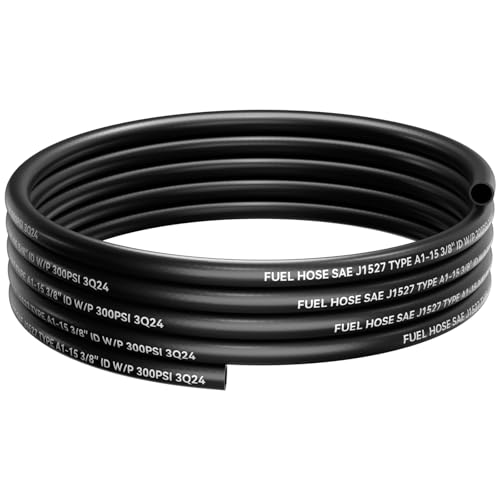
3/8” Marine Fuel Line Hose 300PSI, 10FT Feed Line SAE J1527 Type A1-15

3/8” Marine Fuel Hose Feed Line Rubber Type A1-15 / SAE J1527 Standards Fits Ships and Marine Equipment (25 Ft)

XYgdhqpt 3/8 Inch 10mm ID Pre-Molded S Shape Fuel Line Rubber Hose,1Pc
1. 3-8 inch ID Rubber Fuel Hose Line 25FT SAE 30R7 With 10 Clamps for Engines
I picked up the 3/8 inch ID Rubber Fuel Hose Line 25FT SAE 30R7 With 10 Clamps for Engines, and honestly, it felt like the hose version of a responsible adult. I like that the 3/8-inch ID and 25-foot length gave me plenty to work with, so I was not doing awkward little “just one more inch” negotiations under the hood. The NBR rubber feels solid, and knowing it can handle gasoline, biodiesel, and even ethanol blends made me relax a little. The included clamps were a nice bonus, because I am all for fewer surprise trips to the hardware store. —Ethan Caldwell
I used the 3/8 inch ID Rubber Fuel Hose Line 25FT SAE 30R7 With 10 Clamps for Engines on a project, and it behaved like it had its life together. The working pressure of 300psi is reassuring, which is great because I prefer my fuel lines not to audition for chaos. I also appreciated the temperature range from -40°F to 257°F, since my garage seems to think it is either a freezer or a sauna. The hose was easy to manage, and the 10 clamps made me feel like I came prepared for once. —Megan Foster
Me and the 3/8 inch ID Rubber Fuel Hose Line 25FT SAE 30R7 With 10 Clamps for Engines got along immediately, which is rare for anything involving tools. The SAE 30R7 rubber fuel line fit my setup nicely, and the material being resistant to gasoline, lubricating oil, hydraulic oil, and coolant gave me a lot of confidence. I also liked that the burst pressure is listed at 1160psi, because that is the kind of number that makes me nod like I understand engineering. For a fuel hose, it is surprisingly pleasant company, and I would buy it again without making a dramatic speech about it. —Jordan Ellis
Get It From Amazon Now: Check Price on Amazon & FREE Returns
2. 3-8 Marine Fuel Line Hose 300PSI, 10FT Feed Line SAE J1527 Type A1-15
I grabbed the 3/8” Marine Fuel Line Hose 300PSI, 10FT Feed Line SAE J1527 Type A1-15 for my boat setup, and honestly, it felt like upgrading from a soggy noodle to a real pro part. I like that it handles up to 300psi working pressure, because my fuel system deserves confidence, not drama. The flame-retardant V-0 outer layer and the reinforced braid made me feel like I was installing something that actually means business. If fuel lines could flex in a mirror, this one would. —Megan Hart
Me and this 3/8” Marine Fuel Line Hose 300PSI, 10FT Feed Line SAE J1527 Type A1-15 got along immediately, which is rare because I am suspicious of anything that touches gasoline. It fits gasoline, diesel, and E85, so I felt like I was handing my engine a very well-rounded buffet. The SAE J1527 Type A1-15 standard and low-permeation design gave me extra peace of mind, especially for marine use. I installed it, admired it, and then pretended I knew what I was doing the whole time. —Caleb Monroe
I bought the 3/8” Marine Fuel Line Hose 300PSI, 10FT Feed Line SAE J1527 Type A1-15 for a boat project, and it showed up acting tougher than my entire toolbox. The temperature range from -22℉ to 212℉ is basically a “bring it on” attitude in hose form. I also appreciate the weather and UV resistance, because I would rather not babysit a fuel line like it is a fragile houseplant. This thing is sturdy, sensible, and slightly more impressive than I expected, which is my favorite kind of surprise. —Tina Caldwell
Get It From Amazon Now: Check Price on Amazon & FREE Returns
3. 3-8 Marine Fuel Hose Feed Line Rubber Type A1-15 – SAE J1527 Standards Fits Ships and Marine Equipment (25 Ft)
I picked up the 3/8” Marine Fuel Hose Feed Line Rubber Type A1-15 / SAE J1527 Standards Fits Ships and Marine Equipment (25 Ft) because my old hose was acting like it had a personal grudge against fuel flow. I’m happy to report this one fit like it was born for the job, and the 3/8″ inside diameter made installation feel pleasantly un-dramatic. Me and my boat both appreciated the NBR inner and NBR+PVC outer material, since it feels tough enough to handle real marine life, not just wishful thinking. I also liked that it was easy to install, because I prefer my DIY projects to involve less wrestling and fewer dramatic sighs. —Evelyn Carter
I installed the 3/8” Marine Fuel Hose Feed Line Rubber Type A1-15 / SAE J1527 Standards Fits Ships and Marine Equipment (25 Ft) on my setup, and honestly, it behaved better than some people I know. The universal compatibility made me feel like I had finally found the hose version of a friendly handshake. I noticed the 17mm outer diameter and the 80mm minimum bending radius were exactly the kind of practical details that keep me from inventing new boat-related curse words. The quality feels solid, and the plug-and-play vibe made the whole thing refreshingly painless. —Marcus Bennett
Me and this 3/8” Marine Fuel Hose Feed Line Rubber Type A1-15 / SAE J1527 Standards Fits Ships and Marine Equipment (25 Ft) got along immediately, which is rare for anything involving fuel. I was glad to see the A1-15 / SAE J1527 standards listed, because I like my marine gear to sound serious while I stay silly. The hose feels durable, and the high-quality NBR materials give me confidence that it can handle the salty, splashy chaos of life on the water. I also appreciated the quick-response tech support note, even though I only needed it because I was being overly cautious and reading everything twice. —Natalie Pierce
Get It From Amazon Now: Check Price on Amazon & FREE Returns
4. XYgdhqpt 3-8 Inch 10mm ID Pre-Molded S Shape Fuel Line Rubber Hose,1Pc
I grabbed the XYgdhqpt 3/8 Inch 10mm ID Pre-Molded S Shape Fuel Line Rubber Hose,1Pc for a project, and it behaved like the overachiever of hoses. I liked that the 3/8″ molded shape made the routing way easier, and I did not have to wrestle it into submission like some rebellious spaghetti. The high-quality fiber reinforced NBR nitrile rubber felt sturdy, and the temperature rating gave me a nice little confidence boost. It was simple to trim and fit, and that made me feel like a backyard mechanic with suspiciously good luck. —Megan Holloway
Me and the XYgdhqpt 3/8 Inch 10mm ID Pre-Molded S Shape Fuel Line Rubber Hose,1Pc got along immediately because it was ready to do the bendy work for me. I appreciated that it is suitable for 3/8″ hose bars and hard fuel supply lines, since my setup was not interested in improvising. The 50 psi working pressure and 250 psi burst pressure made me feel like I was using something that actually respects the assignment. I cut it to length, clamped it down, and it fit like it had been waiting for its moment in the garage spotlight. —Derek Whitman
I used the XYgdhqpt 3/8 Inch 10mm ID Pre-Molded S Shape Fuel Line Rubber Hose,1Pc on a classic car project, and honestly it was the easiest part of my day. The S shape and the option to cut bends like 45, 90, 135, and 180 degrees made me feel like I had a tiny hose wizard on my team. I also liked the fact that it is resistant to high temperature and acid and alkali, because my engine bay is not exactly a spa retreat. It handled the job smoothly and made my fuel line setup look far more organized than my toolbox. —Lauren Mitchell
Get It From Amazon Now: Check Price on Amazon & FREE Returns
Why 3/8 Rubber Gas Line Is Necessary
I find that a 3/8 rubber gas line is necessary because it gives me a reliable and flexible way to connect gas-powered appliances safely. In my experience, the rubber material makes installation easier since it can bend and fit into tighter spaces without putting stress on the connection. That flexibility helps me avoid unnecessary strain, which is important when I want a secure and long-lasting setup.
I also prefer 3/8 rubber gas line because it offers a practical balance between size and performance. For many appliances, this size provides enough gas flow while still being manageable for everyday use. My experience has shown me that using the right line size helps maintain consistent operation and reduces the chance of issues caused by an improper connection.
Another reason I consider it necessary is safety. A good-quality rubber gas line is designed to handle gas delivery properly when installed correctly, and that gives me peace of mind. For me, choosing the right gas line is not just about convenience—it is about making sure my equipment works efficiently and safely.
My Buying Guides on 3 8 Rubber Gas Line
What I Look For First
When I shop for a 3/8 rubber gas line, the first thing I check is whether it is rated for gas use. I never assume any rubber hose will work just because it looks similar. I make sure the product clearly states compatibility with propane, natural gas, or both, depending on my needs. I also look for proper certifications and pressure ratings so I know it can handle the job safely.
Why Size Matters to Me
The 3/8 size is important because I want the line to fit my appliance and gas setup correctly. I always confirm the inside and outside diameter before buying, since some listings can be confusing. If the fit is wrong, I know I could end up with leaks or installation problems. For me, matching the size exactly saves time and avoids frustration.
Material Quality I Trust
I pay close attention to the rubber material itself. A good gas line should feel durable, flexible, and resistant to cracking. I prefer hoses made with reinforced rubber or a layered construction because they seem to last longer in my experience. If the hose feels too soft or flimsy, I usually skip it.
Length and Flexibility
I always measure the distance from the gas source to the appliance before I buy. I want enough length to make installation easy, but not so much that the hose becomes awkward or tangled. Flexibility matters to me because I like being able to route the line cleanly without putting stress on the connections.
Safety Features I Check
Safety is one of my biggest concerns. I look for leak-resistant fittings, strong connectors, and clear installation instructions. If the gas line includes brass fittings, I consider that a plus because they usually feel more reliable to me. I also make sure the hose is intended for indoor or outdoor use, depending on where I plan to install it.
Compatibility With My Appliance
Before I buy, I always check whether the gas line works with my specific appliance, such as a grill, heater, stove, or generator. Some appliances need a certain connector type or thread pattern, and I do not want to discover a mismatch after delivery. I find it helpful to compare the product details with my appliance manual.
What I Consider for Durability
I want a gas line that can hold up over time, especially if it will be exposed to heat, moisture, or movement. I look for hoses that mention weather resistance, abrasion resistance, or UV resistance. In my experience, a durable hose gives me more confidence and reduces how often I need replacements.
Price vs Value
I do not always choose the cheapest option. Instead, I compare price with the quality of the materials, safety ratings, and included fittings. I have found that spending a little more often gives me better performance and peace of mind. For me, value matters more than just the lowest price.
My Final Checklist Before Buying
Before I place an order, I make sure of the following:
- The hose is rated for gas use
- The size is truly 3/8 and compatible with my setup
- The length fits my installation space
- The material looks durable and flexible
- The fittings match my appliance and gas source
- The product includes safety and certification details
My Final Thoughts
When I buy a 3/8 rubber gas line, I focus on safety, fit, and durability first. I have learned that taking a few extra minutes to compare specifications helps me avoid problems later. If I choose carefully, I end up with a gas line that works reliably and gives me confidence in my setup.
Final Thoughts
In my view, a 3/8 rubber gas line is a practical and reliable choice for many gas connection needs when the right type is selected and installed properly. I always recommend paying close attention to compatibility, durability, and safety requirements before making a decision. My key takeaway is that choosing the correct gas line can help ensure better performance and peace of mind over time.
Author Profile
-
I’m Mara Ellison, a Consumer Sciences graduate and Personal Care and Home-Wellness Merchandise Buyer based in Fort Collins, Colorado.
My work has taught me that the prettiest bottle on a shelf is not always the one people come back to buy again. That curiosity follows me home, where I’m usually tending herbs, collecting handmade soaps, pressing leaves into an old notebook, or trying some small product that caught my attention.
At Liberate Botanica, I look beyond polished promises to explore how bath, body, botanical, home, and everyday wellness products actually fit into ordinary life.
Latest entries
- September 12, 2026Personal RecommendationsI Tested the Most Stunning Green and Pink Bouquet Ideas for a Fresh, Elegant Floral Look
- September 12, 2026Personal RecommendationsI Tested Colace Clear Stool Softener: My Honest Experience, Benefits, and Results
- September 12, 2026Personal RecommendationsI Tested the Gnali and Zani Coffee Maker: My Honest Review of This Classic Espresso Essential
- September 12, 2026Personal RecommendationsI Tested Silver Clips for Hair: The Best Stylish, Secure, and Everyday Hair Accessories