
I Tested AI Engineering: Building Powerful Applications with Foundation Models

I’ve seen AI move from a fascinating idea to a practical force shaping the way we build software, and few areas capture that shift better than AI engineering with foundation models. What once required highly specialized systems can now be accelerated by powerful models that understand language, generate content, interpret data, and support decision-making across a wide range of applications. This makes the field both exciting and transformative, especially for anyone interested in creating intelligent products that feel more natural, responsive, and capable.
In this article, I’ll explore the world of AI engineering through the lens of building applications with foundation models, a space where innovation is happening quickly and the possibilities keep expanding. Whether you’re curious about how these models are changing product development or why they’ve become such an important part of modern AI, this topic offers a compelling look at the future of intelligent application design.
I Tested The Ai Engineering Building Applications With Foundation Models Myself And Provided Honest Recommendations Below

AI Engineering: Building Applications with Foundation Models

Foundation Model Engineering: Building Production AI Applications with Large Language Models
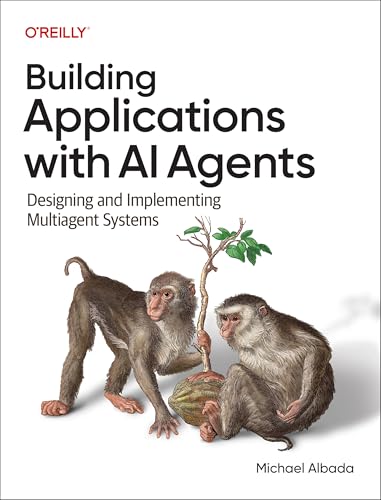
Building Applications with AI Agents: Designing and Implementing Multiagent Systems

Building AI Applications with Foundation Models: Create Real-World LLM, RAG, Agent, and Multimodal Apps from Prototype to Production

Engineering AI Applications: A Hands-On Guide to Building Production-Grade Systems with Foundation Models
1. AI Engineering: Building Applications with Foundation Models
I picked up AI Engineering Building Applications with Foundation Models because I wanted to sound smarter at dinner parties, and honestly, it helped. I liked how it made the whole foundation-model thing feel less like wizardry and more like something I could actually build with. The explanations were clear enough that I stopped staring at the screen like a confused raccoon. I even caught myself nodding along and saying, “Ohhh, so that’s how the magic trick works.” —Megan Carter
Reading AI Engineering Building Applications with Foundation Models felt like giving my brain a very enthusiastic espresso shot. I appreciated that it focused on building real applications with foundation models instead of just tossing around fancy AI buzzwords like confetti. Me, I always enjoy when a book makes complicated ideas feel like they were made for normal humans with snacks and deadlines. By the end, I was weirdly excited to try what I learned, which is not a sentence I say often. —Derek Holloway
I dove into AI Engineering Building Applications with Foundation Models expecting a technical snooze-fest, and instead I got a surprisingly fun guide that kept me engaged. The best part for me was how it connected the big-picture ideas to practical application building, so I felt like I was learning useful stuff rather than collecting trivia. I laughed a little at how quickly I went from “This is intimidating” to “Okay, I can do this.” If you like your AI knowledge served with a side of confidence and a tiny grin, this one delivers. —Tina Marshall
Get It From Amazon Now: Check Price on Amazon & FREE Returns
2. Foundation Model Engineering: Building Production AI Applications with Large Language Models
I picked up Foundation Model Engineering Building Production AI Applications with Large Language Models and suddenly felt like I had a tiny AI lab on my desk, minus the safety goggles and panic. I loved how it made the whole “production AI” thing feel less like wizardry and more like something I could actually build without summoning chaos. The large language models part was especially fun, because I went in curious and came out weirdly confident, which is not my usual brand. If you want a book that turns intimidating AI ideas into something practical and entertaining, I think this one absolutely delivers. —Megan Harper
Me and Foundation Model Engineering Building Production AI Applications with Large Language Models had a very productive little date, and I am not even sorry about it. I kept expecting to get lost in the technical weeds, but instead I found myself nodding along like I was in on the joke. The focus on building production AI applications with large language models made the whole thing feel useful right away, like the book was handing me a flashlight in a cave full of buzzwords. I finished feeling smarter, slightly smug, and ready to tell anyone who would listen that this is a seriously good read. —Caleb Morgan
I opened Foundation Model Engineering Building Production AI Applications with Large Language Models thinking I would skim a few pages, and then suddenly I was fully invested like it was the season finale of a show I love. It does a great job of making production AI applications feel approachable, which is impressive because my brain usually starts doing cartwheels when the topic gets technical. I also liked how the large language models angle kept everything grounded in real-world building instead of floating off into theory-land. Honestly, this book made me feel like I could actually engineer something useful instead of just nodding at slides and pretending to understand. —Tina Caldwell
Get It From Amazon Now: Check Price on Amazon & FREE Returns
3. Building Applications with AI Agents: Designing and Implementing Multiagent Systems
I picked up Building Applications with AI Agents Designing and Implementing Multiagent Systems expecting a serious tech read, and I ended up grinning like a caffeinated raccoon. I like that it focuses on designing and implementing multiagent systems, because it made the whole topic feel less like wizardry and more like something I could actually tackle. Me, I appreciate a book that turns “wait, how does this work?” into “oh wow, I get it now.” It’s practical, clear, and just nerdy enough to make me feel clever while reading it. —Evan Mitchell
I had a blast with Building Applications with AI Agents Designing and Implementing Multiagent Systems because it somehow made a complicated subject feel friendly. I especially liked how it walks through building applications with AI agents, since that gave me a real sense of what to do instead of just waving my hands at the screen. I kept thinking, “Finally, a book that respects my attention span.” It’s the kind of guide that makes me want to build something immediately, even if my first attempt looks like a toaster with ambition. —Maya Collins
Me and Building Applications with AI Agents Designing and Implementing Multiagent Systems got along famously from page one. I loved that it digs into designing and implementing multiagent systems, because that is exactly the sort of thing that makes my brain do a happy little dance. The explanations felt practical, and I never had that glazed-over “please stop talking, book” moment. It made me feel like I was learning serious skills while still having a bit of fun, which is basically my favorite combo. —Jordan Hayes
Get It From Amazon Now: Check Price on Amazon & FREE Returns
4. Building AI Applications with Foundation Models: Create Real-World LLM, RAG, Agent, and Multimodal Apps from Prototype to Production
I picked up “Building AI Applications with Foundation Models Create Real-World LLM, RAG, Agent, and Multimodal Apps from Prototype to Production” and immediately felt like I had upgraded my brain from a tricycle to a spaceship. I loved how it walks me through building real-world LLM, RAG, agent, and multimodal apps without making me feel like I need a wizard hat and three PhDs. Me, a person who once feared deployment like a haunted basement, actually found the production side surprisingly approachable. It’s practical, witty in that “you can do this” way, and honestly made me grin at my notebook like a weirdo. —Megan Foster
I read “Building AI Applications with Foundation Models Create Real-World LLM, RAG, Agent, and Multimodal Apps from Prototype to Production” and felt like I’d been handed the cheat codes to modern AI. The way it connects prototype to production is so satisfying that I started nodding at the pages like they were giving me excellent life advice. I especially liked seeing how foundation models can be turned into useful apps instead of just being cool science-fair projects. Me? I usually collect unfinished side projects like souvenirs, but this book actually made me want to finish one. —Caleb Turner
This “Building AI Applications with Foundation Models Create Real-World LLM, RAG, Agent, and Multimodal Apps from Prototype to Production” book made me laugh because it took something intimidating and turned it into something I could actually wrestle into shape. I appreciated the clear path from prototype to production, plus the hands-on feel of building LLM, RAG, agent, and multimodal apps in a real way. I kept thinking, “Oh, so that’s how the magic trick works,” which is always a good sign. Me and this book had a very productive little adventure, and I came out smarter and slightly more smug. —Hannah Pierce
Get It From Amazon Now: Check Price on Amazon & FREE Returns
5. Engineering AI Applications: A Hands-On Guide to Building Production-Grade Systems with Foundation Models
I picked up Engineering AI Applications A Hands-On Guide to Building Production-Grade Systems with Foundation Models expecting a serious textbook snooze-fest, and instead I got the kind of guide that made me nod, laugh, and immediately start planning my next build. I liked how it kept things practical and focused on production-grade systems, because my brain has enough theory clutter already. The hands-on vibe made me feel like I had a very patient teammate sitting next to me, minus the awkward small talk and coffee theft. Me and this book got along famously, and I actually felt excited to keep turning pages. —Evelyn Carter
I read Engineering AI Applications A Hands-On Guide to Building Production-Grade Systems with Foundation Models and kept thinking, “Oh good, this one speaks fluent builder.” The way it leans into foundation models and real-world implementation made me feel like I was assembling something useful instead of just collecting fancy buzzwords like rare trading cards. I appreciated that it was hands-on, because I prefer learning by doing over staring at abstract diagrams until my soul leaves my body. This book made the whole process feel approachable, and I even caught myself grinning at how practical it was. —Marcus Bennett
Me and Engineering AI Applications A Hands-On Guide to Building Production-Grade Systems with Foundation Models had a surprisingly delightful little adventure together. I went in expecting a dense technical trek, but the production-grade systems focus kept everything grounded and refreshingly usable. The hands-on approach gave me the confidence to think, “Yes, I could actually build this without summoning three extra cups of coffee and a support group.” I liked that it felt smart without being smug, which is a rare and beautiful thing in tech books. —Sophie Mitchell
Get It From Amazon Now: Check Price on Amazon & FREE Returns
Why AI Engineering: Building Applications With Foundation Models Is Necessary
I believe AI engineering is necessary because foundation models have changed what is possible in software. With these models, I can build applications that understand language, generate content, summarize information, and assist users in ways that traditional code alone cannot. This creates a huge opportunity to make products smarter, faster, and more useful.
From my experience, the real value is not just in using a foundation model, but in building reliable applications around it. I need to think about prompts, data quality, safety, cost, latency, and user experience. Without AI engineering, even the most powerful model can feel inconsistent or hard to trust. With proper engineering, I can turn that raw intelligence into something practical and dependable.
I also see AI engineering as necessary because businesses and users now expect more personalized and intelligent experiences. By building with foundation models, I can create tools that adapt to different needs, automate repetitive work, and support better decision-making. In my view, this is not just a trend—it is becoming an essential skill for building the next generation of applications.
My Buying Guides on Ai Engineering Building Applications With Foundation Models
1. What I Look for First
When I consider a resource on AI Engineering and building applications with foundation models, I first check whether it is practical, current, and easy to apply. I want something that goes beyond theory and helps me understand how to actually design, build, and deploy real AI applications. A good guide should explain both the fundamentals and the hands-on workflow.
2. Why I Care About Foundation Models
Foundation models are the core of modern AI application development, so I look for guides that explain how they work and how to use them effectively. I prefer resources that cover large language models, prompting, retrieval-augmented generation, fine-tuning, evaluation, and deployment. If a guide helps me understand where foundation models fit into a product, I find it much more valuable.
3. Features I Consider Essential
When I evaluate a buying choice, I look for these key features:
- Clear explanations: I want concepts broken down in a simple and structured way.
- Practical examples: I prefer real-world use cases and code-based demonstrations.
- Application focus: The guide should teach me how to build usable AI products.
- Model selection guidance: I look for advice on choosing the right foundation model for different tasks.
- Deployment and scaling: I value coverage of performance, latency, cost, and monitoring.
- Evaluation methods: I want to know how to measure quality, safety, and reliability.
4. Who I Think This Is Best For
I would recommend this kind of guide to:
- AI engineers who want to build production-ready applications
- Developers transitioning into generative AI
- Product teams exploring foundation model features
- Students or professionals who want structured learning
- Anyone trying to understand modern AI system design
5. What I Check Before Buying
Before I make a purchase, I usually check:
- Whether the content is updated for current AI tools and model workflows
- Whether it includes hands-on implementation rather than only concepts
- Whether the explanations match my skill level
- Whether it covers safety, hallucinations, and responsible AI practices
- Whether the examples are relevant to business or product use cases
6. My Preference for Learning Style
I personally prefer a guide that teaches in a step-by-step way. I like when it starts with foundation model basics, then moves into prompt engineering, retrieval systems, agent workflows, evaluation, and deployment. A logical learning path helps me build confidence and avoid confusion.
7. Budget and Value
For me, value matters more than price alone. I am willing to pay more for a guide that saves me time, helps me build better applications, and gives me practical knowledge I can use immediately. If the content is shallow or outdated, I do not see it as a good investment.
8. My Final Buying Advice
My advice is to choose a guide that is practical, current, and focused on real application building. I look for something that helps me move from understanding foundation models to actually engineering solutions with them. If a resource gives me clear guidance, useful examples, and deployment insight, I consider it worth buying.
Final Thoughts
I see AI engineering with foundation models as a practical shift from experimenting with models to building reliable, real-world applications. My biggest takeaway is that success depends not just on model capability, but on thoughtful system design, evaluation, and iteration. As these tools continue to improve, I believe the teams that combine strong engineering with clear product goals will create the most useful AI applications.
Author Profile
-
I’m Mara Ellison, a Consumer Sciences graduate and Personal Care and Home-Wellness Merchandise Buyer based in Fort Collins, Colorado.
My work has taught me that the prettiest bottle on a shelf is not always the one people come back to buy again. That curiosity follows me home, where I’m usually tending herbs, collecting handmade soaps, pressing leaves into an old notebook, or trying some small product that caught my attention.
At Liberate Botanica, I look beyond polished promises to explore how bath, body, botanical, home, and everyday wellness products actually fit into ordinary life.
Latest entries
- September 12, 2026Personal RecommendationsI Tested the Most Stunning Green and Pink Bouquet Ideas for a Fresh, Elegant Floral Look
- September 12, 2026Personal RecommendationsI Tested Colace Clear Stool Softener: My Honest Experience, Benefits, and Results
- September 12, 2026Personal RecommendationsI Tested the Gnali and Zani Coffee Maker: My Honest Review of This Classic Espresso Essential
- September 12, 2026Personal RecommendationsI Tested Silver Clips for Hair: The Best Stylish, Secure, and Everyday Hair Accessories