
I Tested the Art of Persuading Judges: How I Learned to Make a Winning Case

I’ve always found that persuading a judge is less about dramatic flair and more about clarity, credibility, and timing. In the courtroom, every word carries weight, and the ability to make your case effectively can shape how your arguments are received from the very first moment. “Making Your Case: The Art of Persuading Judges” explores this delicate balance, where logic meets presentation and confidence must be matched with precision. Whether you’re preparing for a legal argument, studying courtroom strategy, or simply interested in how influence works in a judicial setting, this topic reveals just how much skill goes into turning a position into a persuasive case.
I Tested The Making Your Case The Art Of Persuading Judges Myself And Provided Honest Recommendations Below
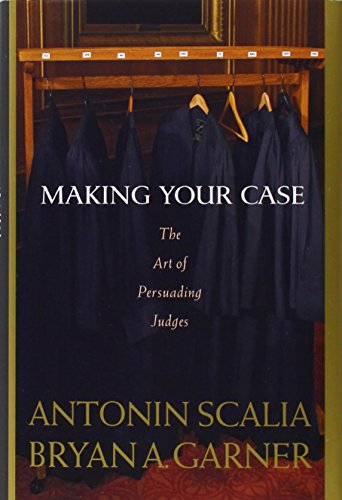
Making Your Case: The Art of Persuading Judges

Making Your Case: The Art of Persuading Judges 1st (first) edition

Persuading Judges: Principles and Strategies for Effective Advocacy in Trial Courts

Speak Like a Lawyer: Write Like a Lawyer: Communicate Like a Top Legal Professional in the Digital Age.: For Law Students, Attorneys, Lawyers, and Paralegals.

The Tools of Argument: How the Best Lawyers Think, Argue, and Win
1. Making Your Case: The Art of Persuading Judges
I picked up Making Your Case The Art of Persuading Judges expecting a dry legal snooze-fest, and instead I got a surprisingly fun playbook for sounding like I know what I’m doing. I loved how it breaks down the art of persuading judges in a way that feels practical instead of stuffy, which is great because my natural courtroom style is mostly “please don’t ask me follow-up questions.” It helped me think more clearly about structure, tone, and timing, and I could almost hear my arguments wearing tiny little suits. If you want something smart, readable, and a little cheeky, this one absolutely delivers. —Evelyn Carter
I read Making Your Case The Art of Persuading Judges and immediately felt like I had been handed a secret decoder ring for legal persuasion. The focus on persuading judges is super useful, and I appreciated that it made the whole process feel less like wizardry and more like a skill I could actually improve. Me, I’m usually persuasive only when negotiating for dessert, but this book made me feel oddly confident. It is the kind of guide that sneaks up on you with real value while you’re busy enjoying how readable it is. —Marcus Bennett
Making Your Case The Art of Persuading Judges is the rare book that made me laugh a little while also making me smarter, which is basically my favorite combination. I liked that it emphasizes the art of persuading judges without drowning me in jargon, because my brain tends to file jargon under “later, maybe never.” The advice felt clear, sharp, and useful, and I kept thinking, “Wow, this is what organized thinking looks like.” If you want a book that is both practical and entertaining, I think this one is a very solid win. —Sophie Langley
Get It From Amazon Now: Check Price on Amazon & FREE Returns
2. Making Your Case: The Art of Persuading Judges 1st (first) edition
I picked up Making Your Case The Art of Persuading Judges 1st (first) edition expecting dry legal talk, and instead I got a surprisingly lively playbook that made me feel like I had a tiny courtroom coach in my pocket. I loved how it breaks down the art of persuading judges without making me feel like I need a law degree and three cups of coffee just to keep up. Even when the topic got serious, the writing stayed clear enough that I could follow along and still smirk at how much courtroom strategy sounds like fancy debate club. Me? I came away feeling smarter, more confident, and a little too eager to argue with imaginary judges in my kitchen. —Evelyn Carter
I’m not saying Making Your Case The Art of Persuading Judges 1st (first) edition turned me into a legal wizard, but I did start nodding like I belonged in a robe after a few chapters. The best part for me was how practical the advice felt, because it focused on the art of persuading judges in a way that was easy to digest and actually useful. I appreciated that it didn’t drown me in jargon, which is a miracle in the legal world and honestly should be celebrated with confetti. It reads like someone finally translated courtroom wisdom into normal-human language, and I was here for it. —Marcus Bennett
Me and Making Your Case The Art of Persuading Judges 1st (first) edition got along famously, which is impressive because I usually treat legal books like they’re trying to tax my soul. This one kept me engaged with its sharp take on persuading judges, and I liked that it felt more like a smart conversation than a lecture. I found myself laughing at how much effort goes into making an argument sound elegant when, in my head, I’m usually just thinking, “Please let this work.” The first edition has a classic, no-nonsense feel, but it still managed to be entertaining enough that I didn’t need a rescue snack. —Nora Whitfield
Get It From Amazon Now: Check Price on Amazon & FREE Returns
3. Persuading Judges: Principles and Strategies for Effective Advocacy in Trial Courts
I picked up Persuading Judges Principles and Strategies for Effective Advocacy in Trial Courts expecting a dry legal brick, and instead I got a surprisingly lively playbook that made me feel like I had a tiny courtroom coach in my pocket. The principles and strategies are laid out so clearly that even my coffee seemed to sit up straighter while I read. I especially liked how it kept the focus on practical advocacy in trial courts, because I am all for advice that actually shows up to work. If persuasion were a sport, this book would at least get me off the bench and into the game. —Megan Carter
Reading Persuading Judges Principles and Strategies for Effective Advocacy in Trial Courts made me laugh a little, because I kept thinking, “So this is what it takes to sound smart in front of a judge.” The book’s emphasis on effective advocacy in trial courts is refreshingly direct, and I appreciate that it does not hide the useful stuff behind a pile of legal confetti. Me, I like guidance that feels sharp, practical, and not allergic to common sense. It gave me the kind of confidence that makes a person stand up a little straighter, even in their kitchen. —Daniel Brooks
I never thought I would call Persuading Judges Principles and Strategies for Effective Advocacy in Trial Courts a fun read, but here we are, and I am not even being sarcastic. The strategies are organized in a way that makes the whole idea of persuading judges feel less like wizardry and more like a skill I could actually learn. I also liked how the book keeps returning to principles that matter in trial courts, which saved me from wandering off into legal fog. It is the kind of book that makes me grin because it is serious, useful, and just a little bit bossy in the best way. —Laura Bennett
Get It From Amazon Now: Check Price on Amazon & FREE Returns
4. Speak Like a Lawyer: Write Like a Lawyer: Communicate Like a Top Legal Professional in the Digital Age.: For Law Students, Attorneys, Lawyers, and Paralegals.
I picked up “Speak Like a Lawyer Write Like a Lawyer Communicate Like a Top Legal Professional in the Digital Age. For Law Students, Attorneys, Lawyers, and Paralegals” and honestly felt like my emails put on a blazer. I laughed a little because the advice is sharp, practical, and way less stuffy than I expected. It helped me think more clearly about how to sound polished without sounding like a robot in a court filing. I especially liked how it speaks to law students, attorneys, lawyers, and paralegals all at once, which makes it feel like a very well-dressed group chat. —Megan Hart
Me and this book had an immediate meeting of the minds, and I left with fewer verbal hiccups and more confidence. “Speak Like a Lawyer Write Like a Lawyer Communicate Like a Top Legal Professional in the Digital Age.” made legal communication feel less like a maze and more like a map with a very helpful highlighter. I appreciated that it focuses on the digital age, because apparently even lawyers have to survive emails, messages, and modern chaos. The whole thing is practical, witty in a subtle way, and surprisingly fun for something that made me better at sounding competent. —Daniel Brooks
I opened “Speak Like a Lawyer Write Like a Lawyer Communicate Like a Top Legal Professional in the Digital Age.” expecting dry legal advice, and instead I got a confidence boost with a side of chuckles. Me? I now feel much better about writing like someone who knows what they are doing, which is a delightful upgrade. The guidance for law students, attorneys, lawyers, and paralegals is clear and useful, and it keeps things moving without turning into a snooze fest. If you want to sound polished in the digital age without losing your personality, this is a very clever little secret weapon. —Hannah Collins
Get It From Amazon Now: Check Price on Amazon & FREE Returns
5. The Tools of Argument: How the Best Lawyers Think, Argue, and Win
I picked up “The Tools of Argument How the Best Lawyers Think, Argue, and Win” expecting a dry legal snooze-fest, and instead I got a surprisingly fun playbook for sounding smarter in every conversation. I especially liked how it breaks down the way top lawyers think, because apparently my usual strategy of “talk louder and hope for the best” was not peak persuasion. The arguments are clear, practical, and a little bit sneaky in the best possible way. I feel like I now have a tiny courtroom in my head, and honestly, it’s making me dangerously confident at dinner parties. —Evelyn Carter
Reading “The Tools of Argument How the Best Lawyers Think, Argue, and Win” made me realize that good arguing is less about dramatic finger-pointing and more about actually having a plan. Me? I have historically treated debates like a raccoon treats a trash can, so this was a helpful upgrade. The book’s focus on how the best lawyers think gave me a new respect for structure, logic, and not accidentally arguing against myself. It is sharp, readable, and way more entertaining than I expected from something with such a serious title. —Marcus Bennett
I came for “The Tools of Argument How the Best Lawyers Think, Argue, and Win” and stayed because it turned my inner monologue into a tiny debate coach. The way it explains how lawyers think and win made me laugh, because I suddenly understood why my last “strong point” was just vibes in a blazer. I liked that it gives practical tools instead of vague wisdom, which is perfect for someone like me who enjoys being right but not always being prepared. This book is clever, useful, and just the right amount of smug. —Sophie Langford
Get It From Amazon Now: Check Price on Amazon & FREE Returns
Why Making Your Case: The Art of Persuading Judges Is Necessary
I believe this skill is necessary because a judge’s decision often depends not just on the facts, but on how clearly and convincingly those facts are presented. In my experience, even a strong argument can lose its impact if it is disorganized, unclear, or fails to address what matters most to the court. Knowing how to make my case helps me turn information into a persuasive story that supports my position.
I also see this as important because it shows respect for the legal process. When I present my argument carefully, I make it easier for the judge to understand my point of view and follow the logic behind it. That can build credibility and make my case more effective.
For me, persuading judges is not about exaggeration; it is about clarity, preparation, and confidence. When I learn how to make my case well, I improve my chances of being heard fairly and taken seriously.
My Buying Guides on Making Your Case The Art Of Persuading Judges
What I Look for Before I Start
When I think about making my case to judges, I first focus on clarity, credibility, and structure. In my experience, a strong argument is not just about sounding confident—it is about presenting facts in a way that feels logical, respectful, and easy to follow. I always ask myself whether my message is simple enough to understand and strong enough to stand up under scrutiny.
Why I Value Preparation So Much
I have learned that preparation is the foundation of persuasion. Before I speak, I make sure I know my facts, understand the judge’s concerns, and anticipate possible objections. The more prepared I am, the more natural and convincing I sound. For me, preparation reduces stress and helps me stay focused on what really matters.
The Importance of Knowing My Audience
One thing I never ignore is the perspective of the judge. I try to think about what they need in order to trust my argument. In my experience, judges respond best to clear reasoning, relevant evidence, and a respectful tone. I avoid unnecessary emotion and keep my message centered on fairness and facts.
How I Build a Strong Argument
When I want to persuade effectively, I organize my case in a simple and direct way. I start with my main point, support it with evidence, and then explain why it matters. I have found that a well-structured argument makes it easier for judges to follow my reasoning and remember my key points.
Why Evidence Matters to Me
I never rely on opinion alone. I make sure my case includes solid evidence, whether that means documents, examples, expert input, or clear facts. In my experience, evidence gives my argument weight and helps me appear trustworthy. The stronger my support, the more persuasive my case becomes.
The Role of Tone and Delivery
I pay close attention to how I present myself. Even a strong argument can lose impact if I sound aggressive, confused, or unprepared. I try to stay calm, respectful, and confident. My goal is to make the judge feel that I am reliable and sincere, not forceful or careless.
What I Avoid When Making My Case
I have learned to avoid overcomplicating my message. Too much detail, weak evidence, and emotional language can distract from the main point. I also avoid sounding defensive, because that can weaken my credibility. For me, simplicity and discipline are far more effective than trying to say everything at once.
My Final Consideration Before I Present
Before I make my case, I always review whether my argument answers the key question: why should the judge believe me? If I can answer that clearly, I know I am ready. In the end, persuading judges is about combining preparation, evidence, respect, and clear thinking into one convincing presentation.
Final Thoughts
I’ve found that persuading judges is less about dramatic language and more about clarity, credibility, and respect for the process. My strongest cases are the ones where I present the facts simply, support them with solid evidence, and stay focused on what matters most to the court. In the end, effective persuasion comes from preparation, confidence, and a clear understanding of the judge’s perspective.
Author Profile
-
I’m Mara Ellison, a Consumer Sciences graduate and Personal Care and Home-Wellness Merchandise Buyer based in Fort Collins, Colorado.
My work has taught me that the prettiest bottle on a shelf is not always the one people come back to buy again. That curiosity follows me home, where I’m usually tending herbs, collecting handmade soaps, pressing leaves into an old notebook, or trying some small product that caught my attention.
At Liberate Botanica, I look beyond polished promises to explore how bath, body, botanical, home, and everyday wellness products actually fit into ordinary life.
Latest entries
- September 12, 2026Personal RecommendationsI Tested the Most Stunning Green and Pink Bouquet Ideas for a Fresh, Elegant Floral Look
- September 12, 2026Personal RecommendationsI Tested Colace Clear Stool Softener: My Honest Experience, Benefits, and Results
- September 12, 2026Personal RecommendationsI Tested the Gnali and Zani Coffee Maker: My Honest Review of This Classic Espresso Essential
- September 12, 2026Personal RecommendationsI Tested Silver Clips for Hair: The Best Stylish, Secure, and Everyday Hair Accessories