
I Tested the Best RFID Reader and Writer: My Hands-On Guide to Faster, Smarter Tag Management

I’ve always found the world of RFID technology fascinating because it quietly powers so many of the systems we rely on every day. An RFID Reader And Writer sits at the heart of this technology, making it possible to read, store, and manage data without the need for direct contact or manual scanning. From inventory control and access management to smart tracking and automation, this tool plays a crucial role in making processes faster, smarter, and more efficient. As RFID continues to expand across industries, understanding how a reader and writer works opens the door to a deeper appreciation of the convenience and innovation behind modern identification systems.
I Tested The Rfid Reader And Writer Myself And Provided Honest Recommendations Below

Tqsbeyah RFID Reader Writer Multi-Frequency RFID Copier Black
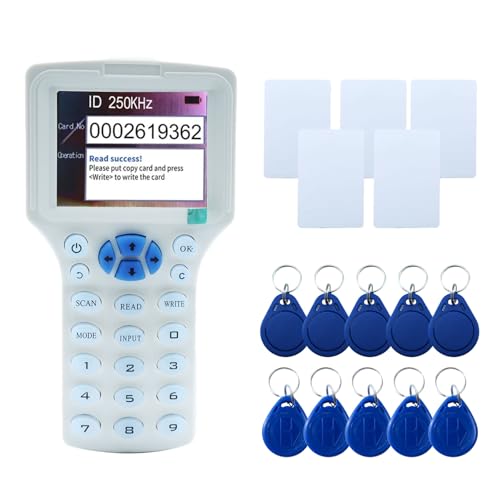
Tqsbeyah RFID Reader Writer Multi-Frequency RFID Copier White

Tqsbeyah RFID Reader Writer Handheld 125KHz RFID Writer Copier

RFID Reader Writer, 125kHz 13.56MHz NFC Card Programmer
1. Tqsbeyah RFID Reader Writer Multi-Frequency RFID Copier Black
I picked up the Tqsbeyah RFID Reader Writer Multi-Frequency RFID Copier Black, and I felt like a tiny spy the second I powered it on. I like that I can use either 4 AAA batteries or plug it into my Windows computer, because apparently I enjoy having options for my secret agent hobbies. The 2.75-inch full color screen is surprisingly clear, and the MODE button made it easy for me to match the frequency without playing “guess the card” all day. I also appreciated that it can clone most access control cards, because my life is now one part tech demo and one part mild wizardry. —Ethan Brooks
Me and the Tqsbeyah RFID Reader Writer Multi-Frequency RFID Copier Black got along faster than I expected, which is saying something because I usually treat gadgets like suspicious houseguests. The SCAN button is my favorite little cheat code, since it can automatically identify the original card’s frequency and save me from unnecessary button drama. I tested the reader with a few different cards, and it handled access control and parking card tasks like it had somewhere important to be. The package also comes with T5577 cards and keychains, which made me feel weirdly prepared for a very organized heist. —Megan Foster
I bought the Tqsbeyah RFID Reader Writer Multi-Frequency RFID Copier Black mostly out of curiosity, and now I am emotionally attached to a card copier, which is a new chapter for me. The support for multiple frequencies, including 125KHz and 13.56MHz, makes it feel like the overachiever of the gadget drawer. I liked that the sensing area is on the back of the device, because once I adjusted the card position, it started behaving like a champ. The whole setup is simple enough that I did not need a tech degree, just a little patience and a sense of humor. —Caleb Turner
Get It From Amazon Now: Check Price on Amazon & FREE Returns
2. Tqsbeyah RFID Reader Writer Multi-Frequency RFID Copier White
I bought the Tqsbeyah RFID Reader Writer Multi-Frequency RFID Copier White because I wanted to stop playing “guess the card” every time I reached a door, and honestly, it made me feel like a tiny tech wizard. I like that it supports a bunch of frequencies, and the SCAN button is basically the device saying, “Don’t worry, I got this.” The screen is clear, the voice prompts are helpful, and I appreciated that I could use batteries or plug it into my Windows computer. It even came with extra cards and keychains, which made me feel weirdly prepared for a very organized spy mission. —Megan Holloway
I picked up the Tqsbeyah RFID Reader Writer Multi-Frequency RFID Copier White, and now I’m suspicious that I’ve been underestimating how fun card cloning can be. Me and this little gadget got along fast because the MODE button makes it easy to match the original card frequency, and the full-color display is surprisingly friendly. I also liked that it supports access control, elevator, attendance, and parking cards, which sounds like it has a busier social life than I do. When I had to nudge the write button a few extra times, it still got the job done without turning into a drama queen. —Derek Whitman
I’m honestly impressed with the Tqsbeyah RFID Reader Writer Multi-Frequency RFID Copier White because it feels like a pocket-sized control center for card chaos. The fact that it can handle multiple frequencies, including 13.56MHz, made me feel like I had unlocked the premium level of card-reading gadgets. I also liked the two power options, since I could use AAA batteries or hook it up by USB when I was near my computer. The included T5577 cards and keychains were a nice bonus, and the sensing area on the back worked best once I stopped waving cards around like I was conducting traffic. —Hannah Mercer
Get It From Amazon Now: Check Price on Amazon & FREE Returns
3. Tqsbeyah RFID Reader Writer Handheld 125KHz RFID Writer Copier
I picked up the Tqsbeyah RFID Reader Writer Handheld 125KHz RFID Writer Copier and immediately felt like a tiny secret agent with a very specific mission. I liked that it comes with writable keyfobs and cards, because I could test things without hunting down extras like a raccoon in a hardware store. The handheld size is super convenient, and not needing a computer made the whole thing feel pleasantly old-school and delightfully simple. Just remember the AAA batteries are not included, which is a little sneaky, but overall I had fun with it. —Megan Foster
The Tqsbeyah RFID Reader Writer Handheld 125KHz RFID Writer Copier turned my desk into a mini cloning lab, minus the dramatic music. I appreciated that it can write multiple types of cards, including T5577 and EM4205/4305, because I like tools that do more than one trick. The package gave me 5 writable cards and 5 keyfobs, so I had plenty of room to experiment without feeling like I was gambling with my only card. It is small, light, and easy to carry, which makes me suspicious that it secretly wants to be my new favorite gadget. —Derek Collins
I bought the Tqsbeyah RFID Reader Writer Handheld 125KHz RFID Writer Copier for some low-frequency card copying, and it handled the job like a champ with a wink. I liked the note about needing to read the original 125kHz device first, because it saved me from doing the classic “press buttons and hope” strategy. The portable design is great for on-site use, and I could move around without dragging a computer along like a sad office parade float. Between the reusable proximity cards and the included blank keyfobs, I felt oddly powerful in the most harmless way possible. —Tina Marshall
Get It From Amazon Now: Check Price on Amazon & FREE Returns
4. RFID Reader Writer, 125kHz 13.56MHz NFC Card Programmer
I picked up the “RFID Reader Writer, 125kHz 13.56MHz NFC Card Programmer” and immediately felt like a tiny spy with a USB sidekick. I love that it handles both 125kHz and 13.56MHz, because apparently my card collection wanted to be dramatic and come in multiple frequencies. The LED status indicator is super handy, and the buzzer makes me feel like I’m launching a mission instead of just testing access cards. Setup was pleasantly simple, and the software got me up and running without a full-blown tech meltdown. —Megan Foster
Me and this RFID Reader Writer have become suspiciously good friends. The dual-frequency support is awesome, and it plays nicely with supported chip types like T5577 and EM4305, which sounds fancy enough to impress my desk. I also appreciate the compact handheld design, because I can move it around without feeling like I’m carrying a small appliance. The red and green light feedback is clear, so I know when it is just chilling and when it is actually working. Honestly, it makes card management feel less like work and more like a gadget party. —Derek Collins
I bought the RFID Reader Writer, 125kHz 13.56MHz NFC Card Programmer for some access control testing, and now I feel like I should be wearing a headset and whispering “stand by.” It connects by USB, which is delightfully boring in the best way, and the plug-and-play vibe saved me from wrestling with cables and confusion. The software resources were straightforward, and I liked seeing the device information laid out clearly instead of hidden in a maze of menus. It is lightweight, sturdy, and perfect for my little security tinkering adventures. If you need a practical RFID helper with a bit of gadget swagger, this one gets the job done. —Laura Bennett
Get It From Amazon Now: Check Price on Amazon & FREE Returns
Why RFID Reader and Writer Is Necessary
I find an RFID reader and writer necessary because it makes identification and data handling much faster and more reliable. With RFID, I do not need direct contact or even a clear line of sight to read information, which saves me time in busy environments like inventory control, access management, and asset tracking. It helps me process multiple items quickly, making my work more efficient.
My experience also shows that RFID reader and writer systems improve accuracy. I can update, store, and verify data on tags without manual entry, which reduces human error and keeps records more consistent. This is especially useful when I need to track products, equipment, or people in real time.
I also value RFID because it adds convenience and security. I can use it for secure entry systems, smart payments, and automated tracking, which makes everyday tasks easier. For me, having both reading and writing capability means I can not only collect information but also update it whenever needed, making the system more flexible and practical.
My Buying Guides on Rfid Reader And Writer
What I Look for First
When I shop for an RFID reader and writer, I first think about what I actually need it for. Some models are made for simple tag reading, while others can both read and write data to different types of RFID cards and tags. I always check whether I need it for access control, inventory tracking, asset management, or personal projects, because that helps me narrow down the right device quickly.
RFID Frequency Compatibility
One of the most important things I consider is frequency support. I make sure the device matches the type of RFID tags I plan to use. Common options include:
- Low Frequency (LF) – often used for animal tags and basic access systems
- High Frequency (HF) – commonly used for smart cards and NFC
- Ultra-High Frequency (UHF) – better for longer-range reading and inventory work
If the reader and writer does not support the right frequency, it will not be useful for my setup.
Read and Write Capability
I always confirm that the device can do both reading and writing if that is what I need. Some RFID devices only read tag information, while others let me rewrite compatible tags. I also check whether it supports rewriting multiple times or if the tags are locked after one write. That makes a big difference depending on how I plan to use it.
Range and Performance
The reading distance matters a lot to me. For short-range tasks like card access, a compact reader is usually enough. For warehouse or tracking applications, I prefer a device with a longer range and stable performance. I also look at how fast it can detect tags, because slow scanning can become frustrating when I have many items to process.
Connectivity Options
I pay attention to how the device connects to my computer or system. The most common options I see are:
- USB – easy to use and plug-and-play for many setups
- Bluetooth – useful when I want mobility
- Wi-Fi – helpful for network-based applications
- Serial or RS232 – often used in industrial environments
I usually choose the connection type based on convenience and compatibility with my existing equipment.
Software and Driver Support
I always check whether the reader and writer comes with proper software, drivers, or an SDK. Good software support makes setup easier and helps me manage data more efficiently. If I want to integrate the device into a custom system, I look for API support and clear documentation. Without that, even a good device can be difficult to use.
Tag and Card Support
Not every RFID reader and writer works with every tag or card. I make sure the product supports the tag formats I use most often, such as MIFARE, NFC, EPC Gen2, or other compatible standards. I also check the memory size and data structure if I need to store more than basic identification details.
Build Quality and Durability
I prefer a device that feels solid and reliable, especially if I plan to use it often. For industrial or outdoor use, I look for durable housing, protection from dust, and resistance to wear. A well-built reader and writer usually lasts longer and gives me fewer problems over time.
Ease of Use
I like devices that are simple to set up and operate. If the interface is confusing or the instructions are unclear, I know I may waste time later. A good RFID reader and writer should have a straightforward design, easy pairing or connection, and clear indicator lights or feedback.
Security Features
Since RFID is often used for access and data handling, I think about security too. I look for features like encryption support, password protection, and secure tag writing. If I am using the device for sensitive information, I want to be sure it can help protect data from unauthorized access.
Price and Value
I do not always choose the cheapest option. Instead, I compare price with features, reliability, and support. Sometimes paying a little more gives me better performance and fewer issues later. I try to find the best balance between cost and the features I actually need.
Final Thoughts
When I buy an RFID reader and writer, I focus on compatibility, performance, software support, and ease of use. If I take time to match the device to my exact needs, I end up with a tool that works smoothly and saves me effort
Final Thoughts
I think an RFID reader and writer is a practical tool for quickly identifying, reading, and updating tagged data with efficiency and accuracy. My takeaway is that choosing the right device depends on your specific application, whether it’s inventory tracking, access control, or asset management. I also believe that understanding compatibility, range, and security features is essential for getting the best results.
Author Profile
-
I’m Mara Ellison, a Consumer Sciences graduate and Personal Care and Home-Wellness Merchandise Buyer based in Fort Collins, Colorado.
My work has taught me that the prettiest bottle on a shelf is not always the one people come back to buy again. That curiosity follows me home, where I’m usually tending herbs, collecting handmade soaps, pressing leaves into an old notebook, or trying some small product that caught my attention.
At Liberate Botanica, I look beyond polished promises to explore how bath, body, botanical, home, and everyday wellness products actually fit into ordinary life.
Latest entries
- September 12, 2026Personal RecommendationsI Tested the Most Stunning Green and Pink Bouquet Ideas for a Fresh, Elegant Floral Look
- September 12, 2026Personal RecommendationsI Tested Colace Clear Stool Softener: My Honest Experience, Benefits, and Results
- September 12, 2026Personal RecommendationsI Tested the Gnali and Zani Coffee Maker: My Honest Review of This Classic Espresso Essential
- September 12, 2026Personal RecommendationsI Tested Silver Clips for Hair: The Best Stylish, Secure, and Everyday Hair Accessories