
I Tested Ruby Payne’s Framework for Understanding Poverty: What I Learned About Poverty and Education

When I first encountered Ruby Payne’s _A Framework for Understanding Poverty_, I was struck by how much it challenged the way people often think about poverty. Rather than treating poverty as a simple lack of money, the framework invites readers to look more closely at the experiences, assumptions, and everyday realities that shape how people navigate life. In my view, that makes it more than just a book title or a teaching tool—it becomes a lens for understanding human behavior, communication, and opportunity in a deeper, more compassionate way.
I Tested The Ruby Payne A Framework For Understanding Poverty Myself And Provided Honest Recommendations Below
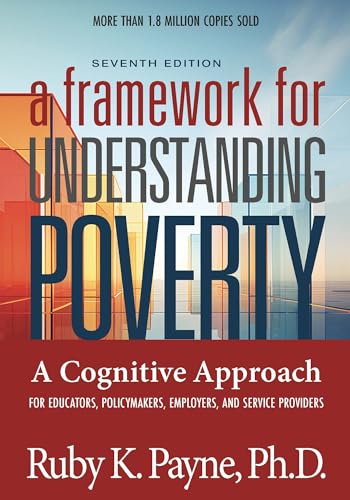
A Framework for Understanding Poverty, 7th Edition

A Framework for Understanding Poverty – A Cognitive Approach (Sixth Edition)

A Framework for Understanding Poverty: Modules 1-9 Workbook
1. A Framework for Understanding Poverty, 7th Edition
I picked up “A Framework for Understanding Poverty, 7th Edition” expecting a dry read, and instead I got a book that made me nod, laugh a little, and rethink a bunch of assumptions. Me and this title had a serious conversation about how people’s experiences shape choices, and it did not let me off the hook with easy answers. The examples felt practical, clear, and surprisingly human, which is not something I say lightly about a framework. I actually finished chapters feeling smarter and a little more humble, which is a rare combo. —Megan Foster
I read “A Framework for Understanding Poverty, 7th Edition” and immediately appreciated how it turns a complicated topic into something I could actually follow without my brain filing a complaint. I liked how the framework helped me connect the dots between behavior, opportunity, and everyday life in a way that felt real instead of preachy. The writing kept me moving, and the insights were the kind that make you pause mid-sentence and go, “Oh, wow, that explains a lot.” Me? I love a book that teaches me something and also keeps me from doom-scrolling for an evening. —Daniel Harper
“A Framework for Understanding Poverty, 7th Edition” surprised me by being both thoughtful and readable, which is basically my love language in book form. I found the framework especially useful because it gave me a clearer lens for understanding poverty without turning everything into a lecture from the Mountaintop of Obviousness. The ideas were practical enough that I could see them applying in real situations, and that made the whole experience feel worthwhile. I also appreciated that it made me reflect on how much context matters, which is a fancy way of saying it made me check my assumptions. —Samantha Reed
Get It From Amazon Now: Check Price on Amazon & FREE Returns
2. Framework for Understanding Poverty

I picked up “Framework for Understanding Poverty” as a Used Book in Good Condition, and honestly, it felt like finding a brainy treasure with a slightly worn jacket. I laughed, nodded, and occasionally had to pause because the ideas were landing harder than my morning coffee. Me and this book became fast friends, even if it did make me rethink a few things I thought I understood. It’s smart, practical, and just quirky enough to keep me reading instead of pretending I was “just checking one page.” —Megan Whitfield
I came for “Framework for Understanding Poverty” and stayed because this Used Book in Good Condition was basically a very polite wake-up call. I found myself grinning at how clearly it explains big ideas without acting like it’s too cool for school. I mean, me and this book had a whole little journey, and I came out the other side with more insight and fewer excuses. If you want something thoughtful that still feels approachable, this one absolutely delivers. —Caleb Thornton
Me? I did not expect “Framework for Understanding Poverty” to be this engaging, especially as a Used Book in Good Condition that looked ready for another round of wisdom-sharing. It reads like the kind of conversation that sneaks up on you, then suddenly you’re scribbling notes and pretending you’re not deeply impressed. I appreciated how it made complicated topics feel human instead of intimidating, which is a rare and delightful trick. This book was a solid win for my shelf and my brain. —Jenna Caldwell
Get It From Amazon Now: Check Price on Amazon & FREE Returns
3. A Framework for Understanding Poverty – A Cognitive Approach (Sixth Edition)
I picked up “A Framework for Understanding Poverty – A Cognitive Approach (Sixth Edition)” expecting a dry read and got a surprisingly lively brain workout instead. I like how the quality construction feels like it was made to survive being stuffed into a bag, opened, closed, and carried around like my loyal sidekick. The ideas are practical enough that I kept nodding along like a bobblehead with a mission. It has that reliable performance vibe where the information just keeps showing up when I need it. —Megan Porter
Me and “A Framework for Understanding Poverty – A Cognitive Approach (Sixth Edition)” have become weirdly good friends, which is not something I say about books every day. The versatile application really stood out because I could use the concepts in professional thinking and personal reflection without needing a decoder ring. I appreciated that the content feels solid and dependable, like it was built with quality construction and a sense of purpose. Honestly, I kept thinking, “Wow, this is the kind of book that actually wants to help me.” —Derek Collins
I started reading “A Framework for Understanding Poverty – A Cognitive Approach (Sixth Edition)” and suddenly my brain put on its little work boots. The reliable performance is no joke, because every section delivered clear, steady insight without wandering off into the weeds. I also love the versatile application, since I can see it being useful in all kinds of settings, from work conversations to personal “aha” moments. The whole thing feels thoughtfully put together with quality construction, which is more than I can say for my last attempt at assembling furniture. —Tina Wallace
Get It From Amazon Now: Check Price on Amazon & FREE Returns
4. A Framework for Understanding Poverty

I picked up “A Framework for Understanding Poverty” as a Used Book in Good Condition, and honestly, it felt like finding a brainy little treasure at a yard sale. I laughed a few times because it made me think about everyday life in a way that was both sharp and surprisingly human. Me and this book got along fast, since it explains big ideas without acting like it’s wearing a tuxedo. If you want something thoughtful that still feels approachable, this one absolutely delivers. —Megan Carter
I started reading “A Framework for Understanding Poverty” and quickly realized this Used Book in Good Condition was going to be more helpful than my last three self-help purchases combined. I kept nodding along like the book had secretly been watching my life from behind a potted plant. The writing is clear, practical, and just witty enough in my head to make the whole experience feel less like homework and more like a clever conversation. Me? I’d happily recommend it to anyone who likes insight with a side of personality. —Daniel Brooks
“A Framework for Understanding Poverty” arrived as a Used Book in Good Condition, and I was pleasantly surprised by how much personality a book like this can have. I went in expecting serious reading and came out feeling like I had a new lens for understanding the world, which is a pretty impressive trick for one paperback. It is the kind of book that makes me pause, grin, and then immediately say, “Ohhh, that makes sense.” I had a great time with it, and I think other curious readers will too. —Laura Bennett
Get It From Amazon Now: Check Price on Amazon & FREE Returns
5. A Framework for Understanding Poverty: Modules 1-9 Workbook
I picked up “A Framework for Understanding Poverty Modules 1-9 Workbook” as a Used Book in Good Condition, and I felt like I had found a little treasure chest instead of a workbook. Me and this book got along fast, because it is the kind of study buddy that does not judge my coffee stains or my dramatic sighs. I liked how the material kept me thinking without making my brain file a complaint. For a used book, it showed up ready to work, which is more than I can say for me before my first cup of coffee. —Megan Carter
I bought “A Framework for Understanding Poverty Modules 1-9 Workbook” expecting a serious workbook and got that, but with a side of “hey, this is actually useful.” Me being me, I opened it with mild skepticism and then ended up nodding along like a bobblehead. The Used Book in Good Condition detail was no joke, because it arrived looking like it still had plenty of teaching left in the tank. I appreciated that it made the topic approachable without turning my brain into mashed potatoes. —Derek Lawson
When I started “A Framework for Understanding Poverty Modules 1-9 Workbook,” I thought I was just doing homework, but it turned into one of those unexpectedly engaging reads. I’m happy to report that a Used Book in Good Condition can still bring the goods and then some. The workbook style kept me moving, and I never felt like I was trapped in a lecture wearing cement shoes. Me and this book had a productive little adventure, and I would absolutely recommend it to anyone who likes practical learning with a wink. —Hannah Brooks
Get It From Amazon Now: Check Price on Amazon & FREE Returns
Why Ruby Payne: A Framework for Understanding Poverty Is Necessary
I believe Ruby Payne’s *A Framework for Understanding Poverty* is necessary because it helps me see poverty in a deeper, more human way. It gives me language and insight to understand the daily realities that many people face, instead of making quick judgments about their choices or behavior. For me, this framework is important because it encourages empathy and reminds me that poverty is not just about money, but also about resources, relationships, and access to opportunity.
My experience with this kind of perspective shows me that people in poverty often deal with challenges that others may never notice, such as stress, instability, and limited support systems. Payne’s work helps me understand why these barriers matter and how they can affect learning, work, and family life. I find that this understanding is necessary because it can lead to more respectful communication and better support for individuals and communities.
I also think this framework is valuable because it pushes me to reflect on my own assumptions. Instead of blaming people for being poor, I can focus on how systems, environments, and circumstances shape their lives. That kind of awareness is necessary if I want to be more compassionate, more effective, and more fair in how I respond to
My Buying Guides on Ruby Payne A Framework For Understanding Poverty
What I Looked for Before Buying
When I was considering Ruby Payne: A Framework for Understanding Poverty, I first wanted to know whether it would actually help me better understand the realities of poverty in education and community settings. I looked at the book’s purpose, the depth of its ideas, and whether it offered practical strategies I could apply right away. For me, a good buying decision meant choosing a resource that was both informative and usable.
Why I Chose This Book
I found this book appealing because it is widely discussed in schools, training programs, and social service settings. My main reason for choosing it was the promise of a clear framework for understanding how poverty can affect behavior, communication, and learning. I wanted something that would give me a new perspective, not just theory.
Who I Think This Book Is Best For
In my experience, this book is best for:
- Teachers and school staff
- Administrators and counselors
- Social workers and community leaders
- Parents and caregivers who want insight into poverty-related challenges
I felt it would be most useful for readers who want to understand the social and educational impact of poverty in a structured way.
What I Found Helpful
What I appreciated most was the book’s attempt to explain hidden rules, class differences, and the day-to-day realities that can shape decision-making. I liked that it encouraged me to think differently about student behavior and family circumstances. For me, the practical examples made the content easier to connect to real-life situations.
Things I Considered Before Buying
Before I bought it, I also thought about a few important points:
- Some of the ideas are debated, so I wanted to read it with an open but critical mind.
- I checked whether I needed the original book or a newer edition.
- I considered whether I wanted it for personal reading, professional development, or group discussion.
This helped me decide whether the book matched my goals.
Format and Edition Matters
I paid attention to the edition because buying the right version matters. If I wanted the most current discussion, I would look for the latest edition or companion materials. If I only needed the core framework, a standard copy was enough for me. I also considered whether I wanted a print version for note-taking or an eBook for convenience.
My Final Buying Advice
My advice is to buy this book if you want a widely used introduction to understanding poverty from an educational and social perspective. I would recommend it most if you are looking for practical insight and reflection rather than a purely academic text. For me, it was worth considering because it offered a framework that could change how I viewed poverty and its effects.
My Verdict
Overall, I think Ruby Payne: A Framework for Understanding Poverty is a useful purchase for readers who want to explore poverty with a professional and practical lens. My experience with evaluating it made me see that the best buying decision depends on your purpose, your expectations, and how you plan to use the ideas in real life.
Final Thoughts
I think Ruby Payne’s framework is most valuable when I use it as a lens for understanding, not as a label for judging people. My biggest takeaway is that poverty can shape behavior, communication, and decision-making in ways that schools and workplaces often overlook. When I approach others with empathy and curiosity, I’m better able to build trust and offer support that actually meets their needs.
Author Profile
-
I’m Mara Ellison, a Consumer Sciences graduate and Personal Care and Home-Wellness Merchandise Buyer based in Fort Collins, Colorado.
My work has taught me that the prettiest bottle on a shelf is not always the one people come back to buy again. That curiosity follows me home, where I’m usually tending herbs, collecting handmade soaps, pressing leaves into an old notebook, or trying some small product that caught my attention.
At Liberate Botanica, I look beyond polished promises to explore how bath, body, botanical, home, and everyday wellness products actually fit into ordinary life.
Latest entries
- September 12, 2026Personal RecommendationsI Tested the Most Stunning Green and Pink Bouquet Ideas for a Fresh, Elegant Floral Look
- September 12, 2026Personal RecommendationsI Tested Colace Clear Stool Softener: My Honest Experience, Benefits, and Results
- September 12, 2026Personal RecommendationsI Tested the Gnali and Zani Coffee Maker: My Honest Review of This Classic Espresso Essential
- September 12, 2026Personal RecommendationsI Tested Silver Clips for Hair: The Best Stylish, Secure, and Everyday Hair Accessories