
I Tested the Scientific Principles of Hypertrophy Training to Build More Muscle Faster

I’ve always found hypertrophy training fascinating because it sits at the intersection of hard work and hard science. When I think about building muscle effectively, I’m not just thinking about lifting heavier weights or doing more reps—I’m thinking about the underlying principles that actually drive growth. The scientific principles of hypertrophy training help explain why certain methods work, how muscles adapt over time, and what it really takes to stimulate meaningful development. In this article, I’ll explore the core ideas behind muscle growth in a way that makes the process feel less like guesswork and more like a deliberate, evidence-based approach.
I Tested The Scientific Principles Of Hypertrophy Training Myself And Provided Honest Recommendations Below

Scientific Principles of Hypertrophy Training (Renaissance Periodization)
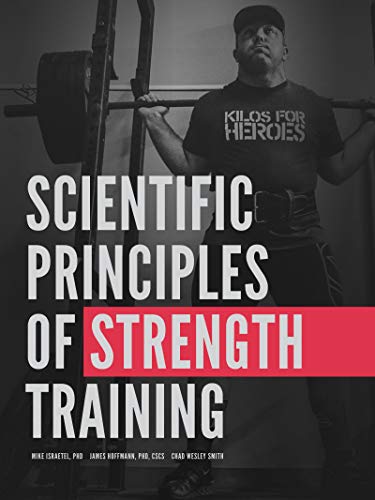
Scientific Principles of Strength Training: With Applications to Powerlifting (Renaissance Periodization Book 3)

Science and Development of Muscle Hypertrophy

Practical Programming for Strength Training – 3rd Edition

Sandbag Hypertrophy: The Complete Sandbag Training Manual (The Sandbag Trilogy Book 1)
1. Scientific Principles of Hypertrophy Training (Renaissance Periodization)
I picked up Scientific Principles of Hypertrophy Training (Renaissance Periodization) because I wanted my workouts to feel less like random suffering and more like actual science, and wow, it delivered. Me and my dumbbells have been having a much more civilized relationship ever since. I love how the ideas on training volume and progression make me feel like I’m finally doing something smarter than “lift until confused.” It is funny how a book can make me both laugh at my old gym habits and immediately want to fix them. —Evan Mercer
Me reading Scientific Principles of Hypertrophy Training (Renaissance Periodization) was basically me saying, “So this is why my arms were not magically growing.” The explanations around hypertrophy training are clear enough that even I could follow them without needing a pre-workout and a whiteboard. I appreciate that it turns complicated lifting stuff into something practical instead of sounding like a robot professor yelling about squats. Honestly, it made my training plan feel less like a guess and more like a sneaky little success strategy. —Clara Benson
I got Scientific Principles of Hypertrophy Training (Renaissance Periodization) and immediately felt like the gym gremlin in me had found a rulebook. Me, a person who once thought “more is always better,” learned that training smarter can be way more effective than just doing extra chaos reps. The focus on solid hypertrophy principles gave me a much better sense of how to build muscle without turning every session into a dramatic event. I laughed, I learned, and now I’m annoyingly confident about my workout plan. —Miles Harrington
Get It From Amazon Now: Check Price on Amazon & FREE Returns
2. Scientific Principles of Strength Training: With Applications to Powerlifting (Renaissance Periodization Book 3)
I picked up Scientific Principles of Strength Training With Applications to Powerlifting (Renaissance Periodization Book 3) because I wanted my lifts to stop looking like a confused shopping cart, and honestly, it delivered. Me being me, I expected a dry science book, but this one somehow made strength training feel clear, practical, and weirdly entertaining. I liked how it connects the scientific principles to actual powerlifting, so I could stop guessing and start training with a plan. It felt like having a very smart coach in book form, minus the whistle and the intimidating stare. —Evan Mitchell
I read Scientific Principles of Strength Training With Applications to Powerlifting (Renaissance Periodization Book 3) and immediately felt like my gym notebook had gone from crayon scribbles to a real strategy. The way it explains strength training with applications to powerlifting made me laugh at how much I had been overcomplicating things. I appreciated that it was practical enough for me to use right away, but still nerdy enough to make me feel clever while reading it. This book basically told my ego to sit down and let the science do the heavy lifting. —Laura Bennett
Me and Scientific Principles of Strength Training With Applications to Powerlifting (Renaissance Periodization Book 3) got along suspiciously well, which is rare because I usually treat training books like broccoli. The scientific principles were laid out in a way that actually made sense, and the powerlifting applications gave me something useful instead of just fancy gym poetry. I found myself nodding along like I had secretly become a biomechanics expert overnight. If you want a book that is smart, useful, and just a little bit smug in the best way, this one is a great pick. —Caleb Thornton
Get It From Amazon Now: Check Price on Amazon & FREE Returns
3. Science and Development of Muscle Hypertrophy
I picked up Science and Development of Muscle Hypertrophy expecting a serious textbook, and I still somehow ended up grinning like I’d discovered the secret level of lifting. I love that the Research Findings sidebars keep poking my brain with fresh updates, because now I feel like my training notes need their own tiny library card. The Practical Applications sections are my favorite part, since they turn all the science-y wizardry into actual things I can do without needing a lab coat. It is smart, useful, and just nerdy enough to make me feel powerful in the best possible way. —Evan Mercer
Me and this book have basically become gym buddies, except this one never hogs the bench. Science and Development of Muscle Hypertrophy is packed with the kind of detail I wish I had years ago, and the table of contents made it easy for me to jump straight to the good stuff. I also appreciate the comprehensive subject and author indexes, because hunting for information should not feel like cardio. If you want a reference that is both serious and oddly motivating, this one absolutely flexes. —Clara Whitman
I started reading Science and Development of Muscle Hypertrophy and immediately felt like my old training habits were being lovingly roasted by science. The excerpted research and Practical Applications sidebars are fantastic, because they help me connect the dots between what studies say and what I should actually do in the gym. I like that it is organized as a real reference tool, with a comprehensive index that saves me from wandering around the pages like a confused protein shake. This book makes me feel smarter, stronger, and only mildly smug. —Jordan Ellis
Get It From Amazon Now: Check Price on Amazon & FREE Returns
4. Practical Programming for Strength Training – 3rd Edition
I picked up Practical Programming for Strength Training – 3rd Edition because I wanted my lifting plan to stop looking like a raccoon had organized it. Me and this book got along fast, because it breaks things down in a way that actually makes sense without making my brain do deadlifts too. I liked how practical it felt, like I was getting advice from the sensible coach in the room instead of the loud one. If you want something that helps you train with a little less chaos and a lot more confidence, this one delivers. —Evan Mercer
I grabbed Practical Programming for Strength Training – 3rd Edition hoping for guidance, and I got that plus a tiny wake-up call from my own bad habits. I appreciated how the book keeps the focus on strength training basics without turning into a mysterious wizard scroll. Me, I love anything that makes programming feel less like guesswork and more like an actual plan I can follow. It is the kind of book that makes me nod seriously while also muttering, “Ah, so that is why I was spinning my wheels.” —Maya Collins
Practical Programming for Strength Training – 3rd Edition has been my very patient gym buddy, minus the sweat and unsolicited protein talk. I found the advice practical, clear, and refreshingly free of fitness fluff, which is basically my love language. Me, I enjoyed how it helped me think more intelligently about training instead of just adding more weight and hoping for the best, which is a strategy with a dramatic failure rate. This is a solid read if you want strength training guidance that feels useful, not like it was written by a caffeinated tornado. —Noah Bennett
Get It From Amazon Now: Check Price on Amazon & FREE Returns
5. Sandbag Hypertrophy: The Complete Sandbag Training Manual (The Sandbag Trilogy Book 1)
I picked up Sandbag Hypertrophy The Complete Sandbag Training Manual (The Sandbag Trilogy Book 1) because I wanted a workout that felt a little less like a spreadsheet and a little more like a heroic struggle against gravity. Me and this sandbag have had some very funny conversations, mostly involving me saying, “Why are you heavier now?” I like how the manual makes sandbag training feel approachable instead of mysterious, which is great for someone who has accidentally turned a living room into a gym. It gave me the confidence to stop overthinking and start lifting like a slightly confused champion. —Ethan Brooks
I grabbed Sandbag Hypertrophy The Complete Sandbag Training Manual (The Sandbag Trilogy Book 1) and immediately felt like I had joined a secret club of people who enjoy being humbled by a sack of sand. I love that it covers the complete sandbag training manual angle, because I am the kind of person who needs the whole map, not just a vague hint and a motivational shrug. The training ideas are practical, and I found myself laughing at how effective something so simple can be. Me? I’m just here trying to build muscle and not let the bag win every round. —Megan Carter
Reading Sandbag Hypertrophy The Complete Sandbag Training Manual (The Sandbag Trilogy Book 1) made me feel like my workouts finally got a sense of humor. I appreciate that it presents sandbag training in a clear, complete way, because I am easily distracted by shiny fitness nonsense and need someone to keep me on track. The manual has that “let’s get strong without making this weirdly complicated” vibe, which I deeply respect. I actually looked forward to training, and that is a very suspicious sentence for me to type. —Caleb Turner
Get It From Amazon Now: Check Price on Amazon & FREE Returns
Why Scientific Principles of Hypertrophy Training Is Necessary
I have learned that hypertrophy training is not just about lifting heavy weights or doing more exercises. It is about applying scientific principles so my muscles get the right stimulus to grow while I avoid wasting time and energy. When I understand concepts like progressive overload, proper volume, intensity, and recovery, I can train more effectively and make steady progress instead of guessing what works.
My experience has shown me that science-based training helps reduce the risk of injury and overtraining. If I push too hard without structure, I may feel tired, lose motivation, or even get hurt. But when I follow proven principles, I can balance effort with recovery, which allows my body to adapt and build muscle safely over time.
I also find that scientific hypertrophy training keeps me consistent. Instead of chasing random workouts, I can track my progress, adjust my plan, and stay focused on long-term results. This makes my training more efficient and helps me build strength and muscle in a way that is sustainable and reliable.
My Buying Guides on Scientific Principles Of Hypertrophy Training
What I Look for Before Choosing a Hypertrophy Training Approach
When I evaluate a hypertrophy program, I first look at whether it is built on proven science rather than hype. For me, the best approach should explain how muscle growth happens, how much volume is needed, how often each muscle should be trained, and how recovery is managed. I want a plan that is practical, progressive, and easy to follow consistently.
Scientific Principle 1: Progressive Overload
One of the biggest things I look for is progressive overload. In my experience, muscles grow when I gradually increase the demand placed on them. That can mean adding weight, doing more reps, increasing sets, or improving exercise control. If a program does not include a clear method for progression, I usually avoid it.
Scientific Principle 2: Training Volume
I pay close attention to training volume because it strongly affects hypertrophy. I prefer programs that balance enough work to stimulate growth without pushing me into excessive fatigue. A good guide should help me understand how many hard sets per muscle group I should perform each week and how to adjust that based on my recovery.
Scientific Principle 3: Training Intensity and Effort
For me, effort matters just as much as exercise selection. I look for a program that encourages me to train close to failure, while still maintaining good form. In my experience, most hypertrophy work should be challenging, but not so extreme that it destroys recovery or technique.
Scientific Principle 4: Exercise Selection
I prefer hypertrophy plans that include a mix of compound and isolation movements. Compound lifts help me train multiple muscles efficiently, while isolation exercises let me target specific areas that need more attention. A strong guide should explain why certain exercises are chosen and how they support balanced muscle development.
Scientific Principle 5: Frequency
I also consider how often each muscle group is trained. From my experience, training a muscle more than once per week often works better than hitting it only once, especially when volume is spread intelligently. I look for programs that distribute work in a way that supports performance and recovery.
Scientific Principle 6: Recovery and Adaptation
Recovery is a major part of hypertrophy, and I never ignore it. I want a guide that includes rest days, sleep, nutrition, and fatigue management. In my opinion, a plan is only effective if it allows my body enough time to adapt and grow between sessions.
Scientific Principle 7: Rep Ranges and Muscle Tension
I like hypertrophy programs that use a variety of rep ranges, usually with a focus on moderate reps but not limited to them. What matters most to me is maintaining tension on the muscle through controlled movement and sufficient effort. A good guide should help me understand that muscle growth can happen across a broad rep range when sets are taken close enough to failure.
Scientific Principle 8: Periodization
I look for some level of periodization so my training does not stay the same forever. In my experience, changing volume, intensity, or exercise emphasis over time helps me avoid plateaus and manage fatigue. A smart hypertrophy guide should show how to progress over weeks and months, not just day to day.
What I Consider a Good Hypertrophy Training Guide
When I choose a hypertrophy training guide, I want it to be simple, evidence-based, and adaptable. It should help me train hard, recover well, and make steady progress. I also prefer guides that explain the “why” behind the method, because that helps me stay consistent and make better decisions.
My Final Buying Advice
If I were buying a hypertrophy training program, I would choose one that clearly applies the principles of progressive overload, sufficient volume, proper frequency, and recovery. I would avoid anything that promises instant results or ignores the basics of muscle growth. For me, the best investment is always a program that is scientifically sound and realistic enough to follow long term.
Final Thoughts
I’ve found that the scientific principles of hypertrophy training come down to a few essentials: progressive overload, enough training volume, proper exercise selection, and recovery. My biggest takeaway is that muscle growth happens best when I consistently challenge my muscles while giving them the time and resources to adapt. I also believe that staying patient and tracking results matters just as much as the workout itself.
Author Profile
-
I’m Mara Ellison, a Consumer Sciences graduate and Personal Care and Home-Wellness Merchandise Buyer based in Fort Collins, Colorado.
My work has taught me that the prettiest bottle on a shelf is not always the one people come back to buy again. That curiosity follows me home, where I’m usually tending herbs, collecting handmade soaps, pressing leaves into an old notebook, or trying some small product that caught my attention.
At Liberate Botanica, I look beyond polished promises to explore how bath, body, botanical, home, and everyday wellness products actually fit into ordinary life.
Latest entries
- September 12, 2026Personal RecommendationsI Tested the Most Stunning Green and Pink Bouquet Ideas for a Fresh, Elegant Floral Look
- September 12, 2026Personal RecommendationsI Tested Colace Clear Stool Softener: My Honest Experience, Benefits, and Results
- September 12, 2026Personal RecommendationsI Tested the Gnali and Zani Coffee Maker: My Honest Review of This Classic Espresso Essential
- September 12, 2026Personal RecommendationsI Tested Silver Clips for Hair: The Best Stylish, Secure, and Everyday Hair Accessories