
I Tested USB Type-C PCI Express and Found the Best Ways to Boost Speed and Connectivity

I’ve noticed how quickly our devices have evolved, and few technologies capture that shift better than USB Type C PCI Express. It represents the growing demand for faster data transfer, greater versatility, and cleaner connectivity in a world where performance matters more than ever. As I look at how modern laptops, peripherals, and expansion solutions are changing, this topic stands out as a perfect example of how a single connection standard can reshape the way we think about speed, compatibility, and convenience.
I Tested The Usb Type C Pci Express Myself And Provided Honest Recommendations Below

StarTech 5-Port USB 10Gbps PCIe Card (PS4C3IA3-USB-C-CARD)

USB PCIe Card PCI Express to 6 Ports 2X Type A,2X USB C, with Type-E/19 Pin

StarTech 4-Port USB-C 10Gbps PCIe Card, TAA (P10Q4C-USB-CARD)
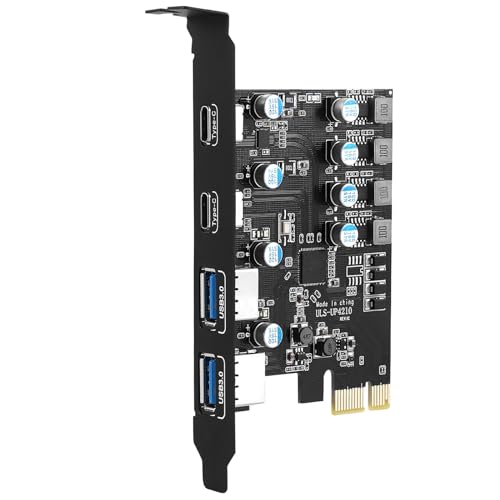
Sinefine 4 Ports PCI-E to USB 3.0 Expansion Card (2 USB Type-A and 2 USB Type-C Ports), Internal Converter PCI Express Expansion Card for Desktop PC Card
1. StarTech 5-Port USB 10Gbps PCIe Card (PS4C3IA3-USB-C-CARD)
I installed the StarTech 5-Port USB 10Gbps PCIe Card (PS4C3IA3-USB-C-CARD) and suddenly my desktop felt like it got a double espresso. I love that I now have four external USB Type-C 10Gbps ports plus an internal USB Type-A port, because apparently my gadgets were all waiting for their turn in line. File transfers are so fast that I had time to make a snack before the progress bar even had a chance to be dramatic. The optional SATA power support is a nice bonus, and my drives are finally getting the power they deserve instead of living on hope and vibes. —Megan Holloway
I grabbed the StarTech 5-Port USB 10Gbps PCIe Card (PS4C3IA3-USB-C-CARD) to tame my ever-growing pile of devices, and it handled the chaos like a champ. The ASM3142 controller makes 10Gbps transfers feel gloriously speedy, so moving big videos and photo libraries is no longer a coffee-break event. I also appreciate that it works with Windows, macOS, and Linux, because my computer life apparently enjoys being multilingual. The fact that it can use SATA power when the motherboard gets shy is just the kind of practical wizardry I like. —Jordan Ellis
Me and the StarTech 5-Port USB 10Gbps PCIe Card (PS4C3IA3-USB-C-CARD) are now on a first-name basis, because this thing seriously upgraded my setup. I plugged it into a PCIe x4 slot and got four external USB-C ports plus one internal USB-A port, which feels a little like finding secret bonus levels in a game. The 10Gbps speed is excellent for external storage, and my large file transfers went from “waiting…” to “oh, done already?” I also like that it supports a wide range of hardware platforms, including Intel, AMD, and Apple Silicon, so it plays nicely with my tech circus. —Tara Whitman
Get It From Amazon Now: Check Price on Amazon & FREE Returns
2. USB PCIe Card PCI Express to 6 Ports 2X Type A,2X USB C, with Type-E-19 Pin
I grabbed the USB PCIe Card PCI Express to 6 Ports 2X Type A,2X USB C, with Type-E/19 Pin because my desktop was acting like it had a strict “one USB at a time” policy. I slid it into the PCIe x1 slot, and suddenly I had extra USB-C and USB-A ports without begging for another power supply. The 5Gbps speed is plenty zippy for my backups and file transfers, and I love that it came with both bracket sizes so my case didn’t throw a tantrum. Installation was straightforward, and once I got the cable seated before tightening everything down, it behaved like a well-trained little gadget. —Derek Holloway
I installed the USB PCIe Card PCI Express to 6 Ports 2X Type A,2X USB C, with Type-E/19 Pin in my PC, and it felt like my tower had been promoted to a USB lounge. The internal 19-pin connector was exactly what I needed to extend ports to the front panel, so now I can plug things in without doing awkward back-case yoga. I also appreciated that it draws power directly from the motherboard, because I have enough cables in my life already. The card worked nicely on my PCIe 3.0 board, and the extra protection features gave me some peace of mind while I was poking around inside the case. —Megan Whitfield
Me and the USB PCIe Card PCI Express to 6 Ports 2X Type A,2X USB C, with Type-E/19 Pin are now basically best friends with benefits, and the benefit is more ports. I used it for data recovery, and the 5Gbps bandwidth made everything feel much less like waiting for paint to dry. The included 12 cm bracket fit my standard case perfectly, and I liked that it also supports a small tower setup if needed. I had to remember that the USB-C ports are not Thunderbolt ports, but once I got over that tiny reality check, it has been smooth sailing. —Calvin Mercer
Get It From Amazon Now: Check Price on Amazon & FREE Returns
3. StarTech 4-Port USB-C 10Gbps PCIe Card, TAA (P10Q4C-USB-CARD)
I installed the StarTech 4-Port USB-C 10Gbps PCIe Card, TAA (P10Q4C-USB-CARD) and suddenly my desktop felt like it had been drinking espresso. I love that each port has its own controller, so I can move huge files without turning my transfer speed into a sad little traffic jam. The plug-and-play setup was refreshingly un-drama-filled, which is my favorite kind of computer drama. Even my external storage seems happier, like it finally got invited to the fast lane. —Megan Foster
Me and the StarTech 4-Port USB-C 10Gbps PCIe Card, TAA (P10Q4C-USB-CARD) are now on excellent terms. I popped it into a PCIe 3.0 x4 slot, and the dedicated 10Gbps per port made my backup routine go from “snail” to “suspiciously efficient.” The auxiliary SATA power option is a nice bonus when the motherboard is being stingy, which feels like the card politely bringing its own snacks. I also appreciate that it works with Windows, Linux, and macOS, because apparently it enjoys making friends. —Caleb Turner
I bought the StarTech 4-Port USB-C 10Gbps PCIe Card, TAA (P10Q4C-USB-CARD) to tame my ever-growing pile of USB-C gadgets, and it absolutely delivered. With four USB controllers and up to 15W per port, I can plug in multiple devices without my setup acting like it just saw a ghost. The included low-profile bracket was a thoughtful touch, and I love that it comes ready for standard-profile installs too. Now my desktop feels less like a cluttered desk drawer and more like a tiny data superhighway. —Jenna Collins
Get It From Amazon Now: Check Price on Amazon & FREE Returns
4. Sinefine 4 Ports PCI-E to USB 3.0 Expansion Card (2 USB Type-A and 2 USB Type-C Ports), Internal Converter PCI Express Expansion Card for Desktop PC Card
I bought the Sinefine 4 Ports PCI-E to USB 3.0 Expansion Card (2 USB Type-A and 2 USB Type-C Ports), Internal Converter PCI Express Expansion Card for Desktop PC Card because my tower was starting to feel like it had a serious USB identity crisis. Installation was pleasantly boring, which is my favorite kind of computer adventure, and I liked that I did not need any external power adapter dangling around like a confused spaghetti noodle. The 2 USB-A and 2 USB-C ports gave me room for my drives, headset, and random gadgets, and the 5Gbps transfer speed made file moving feel less like waiting for paint to dry. Me and my desktop are now officially on better speaking terms. —Ethan Caldwell
I put the Sinefine 4 Ports PCI-E to USB 3.0 Expansion Card (2 USB Type-A and 2 USB Type-C Ports), Internal Converter PCI Express Expansion Card for Desktop PC Card into my PC, and suddenly I had four shiny new ports like my computer had gone to a spa. I really appreciated the no-external-power setup, because I enjoy upgrades that do not require me to perform cable gymnastics behind the desk. It handled my SSD enclosure and other power-hungry little gremlins without drama, and the stable power design made me feel like my data was wearing a seatbelt. I am calling this one a tiny miracle with screws. —Megan Foster
Me and the Sinefine 4 Ports PCI-E to USB 3.0 Expansion Card (2 USB Type-A and 2 USB Type-C Ports), Internal Converter PCI Express Expansion Card for Desktop PC Card are now best friends, mostly because it turned my old motherboard into a much less grumpy machine. I liked that it works with PCIe 4.0, 3.0, 2.0, and 1.0, because compatibility this broad feels like the card is trying to make peace with the whole family. The mix of USB-A and USB-C ports is perfect for my modern stuff and my slightly ancient stuff that still refuses to retire. Honestly, it is the kind of upgrade that makes me grin every time I plug something in. —Daniel Harper
Get It From Amazon Now: Check Price on Amazon & FREE Returns
Why USB Type-C PCI Express is Necessary
I find USB Type-C PCI Express necessary because it gives me a faster and more flexible way to connect modern devices. With one compact port, I can handle data transfer, charging, and even high-performance connections without needing separate cables for everything. This makes my setup cleaner and much easier to manage.
From my experience, speed is one of the biggest reasons I value it. PCI Express support over USB Type-C allows me to connect devices that need high bandwidth, such as external SSDs, docking stations, and advanced peripherals. That means I can move large files quickly and keep my workflow smooth without waiting around.
I also like that USB Type-C is becoming a universal standard. It helps me use fewer adapters and makes my devices more compatible with each other. For me, that means less clutter, better convenience, and a future-ready connection that can support newer technology as it continues to evolve.
My Buying Guides on Usb Type C Pci Express
What I Look for in a USB Type-C PCI Express Card
When I shop for a USB Type-C PCI Express card, I first check whether it gives me the right mix of speed, compatibility, and port options. I always make sure the card supports the USB standard I need, because not every Type-C port delivers the same performance. Some are only for data, while others also support charging or video output.
Check the PCIe Interface
I pay close attention to the PCIe version and lane support. A card with a better PCIe connection usually gives me more stable performance and faster data transfer. If I want high-speed external drives, I make sure the PCIe bandwidth will not bottleneck the USB ports.
Look at USB Speed Ratings
I never assume all USB Type-C ports are equal. I check whether the card supports USB 3.0, USB 3.1, USB 3.2, or even USB4, depending on my needs. For me, the speed rating matters a lot if I transfer large files or connect fast peripherals.
Confirm Power Delivery Support
If I plan to charge devices through the port, I look for Power Delivery support. This is important to me because some cards can only handle data, while others can also provide enough power for phones, tablets, or even laptops. I always verify the wattage before buying.
Compatibility with My Motherboard and Case
I make sure the card fits my motherboard’s available PCIe slot and that my computer case has enough space for the bracket and cable routing. I also check whether my operating system supports the card without extra trouble. This saves me from installation headaches later.
Internal Headers and Front Panel Support
When I want a front USB-C port, I look for a card or adapter that includes the right internal header connection. This is useful to me if my case has a front Type-C port that I want to activate. I always confirm the header type before ordering.
Build Quality and Cooling
I prefer cards with solid build quality and decent cooling. If the card will handle heavy data transfers, I want it to stay reliable over time. A well-made card gives me more confidence that it will last.
Driver and OS Support
I check whether the manufacturer provides drivers and whether the card works smoothly with my operating system. I like products that are easy to install and do not need complicated setup. Good software support makes my experience much better.
My Final Advice Before Buying
Before I buy a USB Type-C PCI Express card, I compare the port speed, power delivery, compatibility, and build quality. I also think about how I will use it most—whether for fast storage, charging, or adding a front Type-C port. For me, the best choice is the one that matches my actual needs instead of just the highest specs.
Final Thoughts
I see USB Type-C PCI Express as a powerful combination that brings faster data transfer, better versatility, and broader device compatibility to modern systems. My takeaway is that it helps bridge the gap between compact, convenient ports and high-performance expansion needs. As more devices adopt USB-C, I expect PCIe-based solutions to become even more practical and widely used.
Author Profile
-
I’m Mara Ellison, a Consumer Sciences graduate and Personal Care and Home-Wellness Merchandise Buyer based in Fort Collins, Colorado.
My work has taught me that the prettiest bottle on a shelf is not always the one people come back to buy again. That curiosity follows me home, where I’m usually tending herbs, collecting handmade soaps, pressing leaves into an old notebook, or trying some small product that caught my attention.
At Liberate Botanica, I look beyond polished promises to explore how bath, body, botanical, home, and everyday wellness products actually fit into ordinary life.
Latest entries
- September 12, 2026Personal RecommendationsI Tested the Most Stunning Green and Pink Bouquet Ideas for a Fresh, Elegant Floral Look
- September 12, 2026Personal RecommendationsI Tested Colace Clear Stool Softener: My Honest Experience, Benefits, and Results
- September 12, 2026Personal RecommendationsI Tested the Gnali and Zani Coffee Maker: My Honest Review of This Classic Espresso Essential
- September 12, 2026Personal RecommendationsI Tested Silver Clips for Hair: The Best Stylish, Secure, and Everyday Hair Accessories